Integral Spacetime Review: Filecoin Storage Neocloud for AI Workloads
Review summary
Integral Spacetime launched in October 2026 as a storage neocloud that acquires businesses and migrates their data workloads to the Filecoin network.
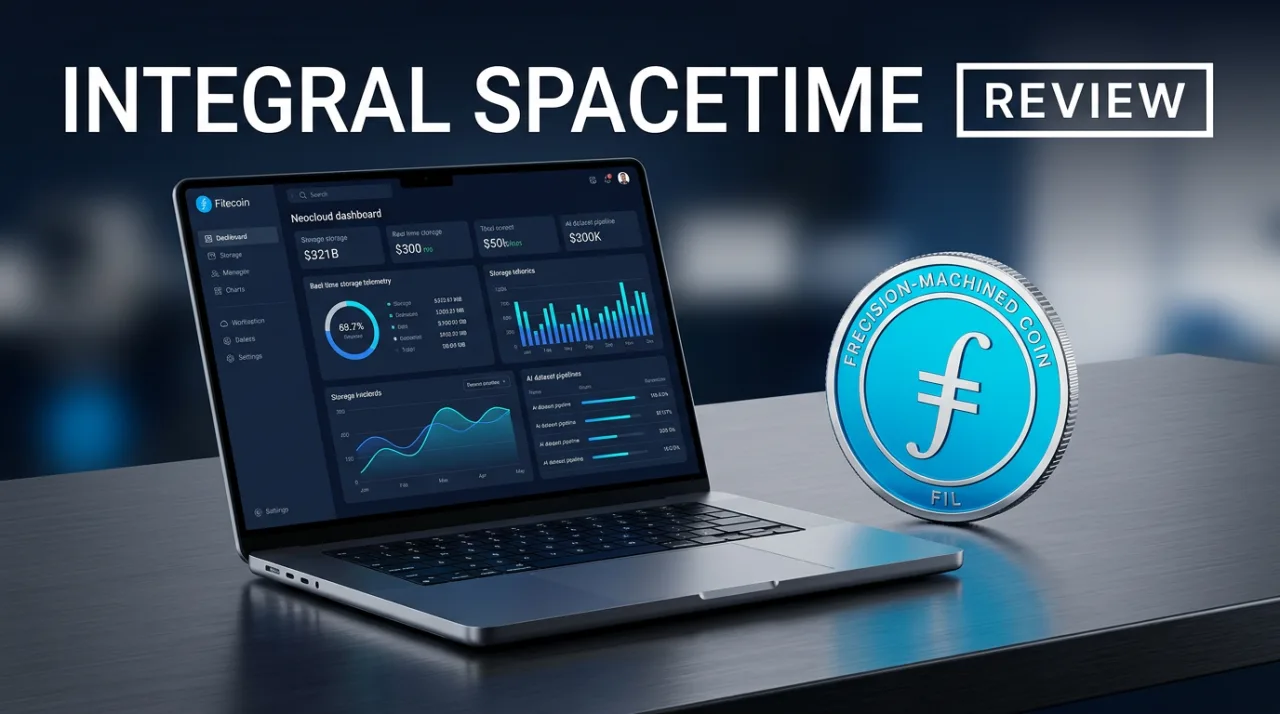
Integral Spacetime review starts with its October 14, 2026 launch as a storage neocloud built on the Filecoin network. The company targets AI-era data storage by acquiring software businesses that hold large workloads and shifting those workloads to decentralized capacity. This approach differs from GPU-focused neoclouds that require years to build new infrastructure.
Integral Spacetime Operations and Filecoin Integration
Integral Spacetime acquires companies in backup, disaster recovery, media, and business data management. It retains the acquired products and customer relationships while moving storage operations to enterprise-grade Filecoin providers. The network at launch included roughly 470 to 481 independent providers delivering 1.46 to 1.49 exabytes of daily storage, with raw capacity reported between 1.3 and 1.4 EiB across five continents.
The operating model centralizes backend functions under a shared AI-native team. New capacity is financed against signed customer contracts rather than speculative builds. This structure aims to improve margins by replacing legacy suppliers with Filecoin storage and by adapting products for AI agent workflows. No specific acquisition targets or migration volumes have been disclosed as of late October 2026.
Key operational elements include:
- Workload migration from traditional suppliers to live Filecoin capacity
- Centralized management of storage, security, and optimization layers
- Reinvestment of recurring revenue into additional network capacity
- Modernization of acquired software for AI-era data patterns
Security relies on Filecoin’s existing provider network and enterprise data-center standards. The company holds no separate regulatory licenses beyond those required for standard storage operations, and forward-looking statements note execution risks common to acquisition strategies.
Acquisition Model, Market Context, and Current Limitations
The acquisition strategy supplies both customers and revenue at the point of purchase. Traditional cloud storage construction can take more than two years; Integral Spacetime instead uses already-proven Filecoin capacity. The broader cloud storage market stands at roughly $92 billion annually and is projected to reach $261 billion by 2031, with AI demand creating HDD supply constraints into 2028.
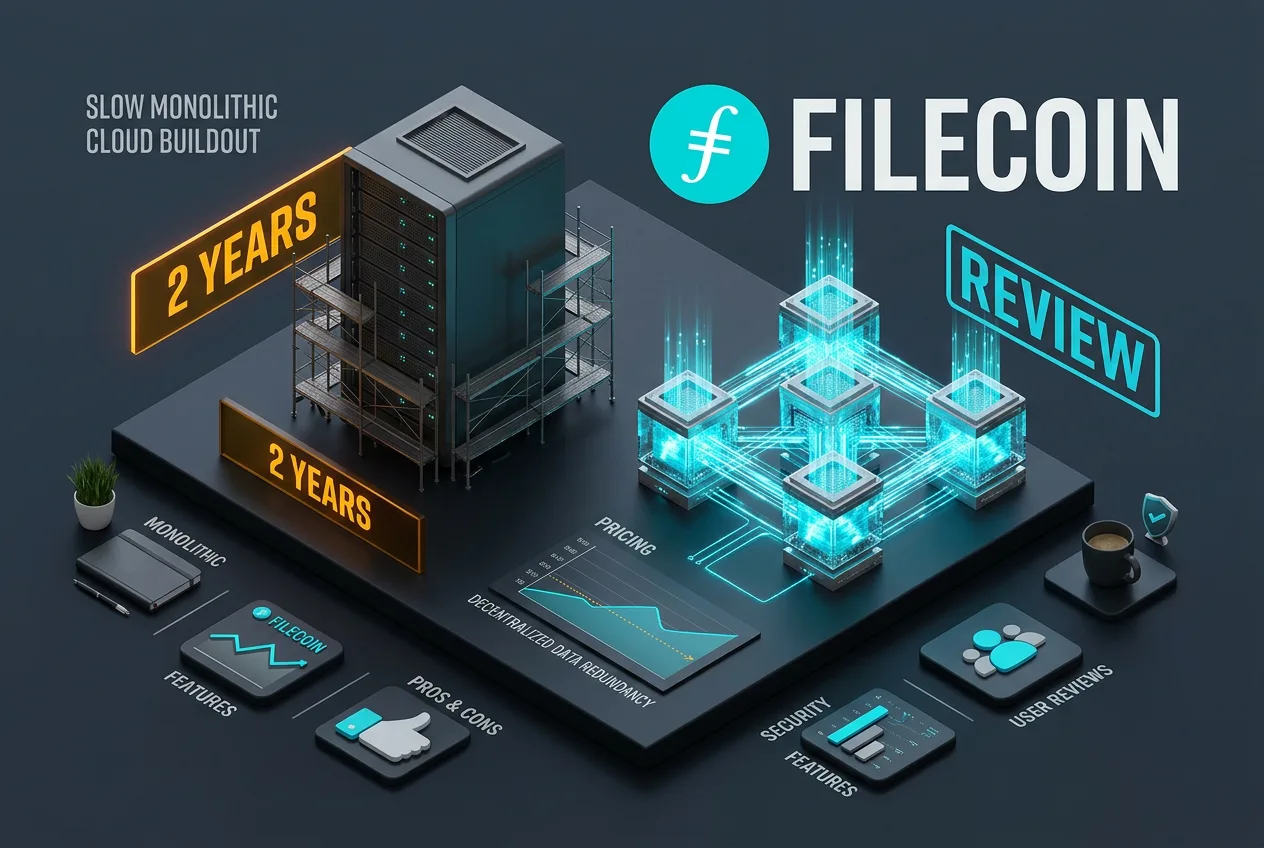
A direct comparison of storage approaches appears below.
| Approach | Capacity Source | Time to New Capacity | Customer Acquisition |
|---|---|---|---|
| Integral Spacetime | Existing Filecoin providers | Immediate via network | Via acquired businesses |
| GPU neoclouds | New data-center builds | 2+ years | Organic sales |
| Traditional cloud | Owned facilities | 18–36 months | Direct sales |
Because the company launched only weeks ago, public user reviews and complaint records do not yet exist. Pricing details, commission structures, and specific service tiers remain undisclosed. Potential issues include dependence on Filecoin network performance, integration challenges during migrations, and the absence of proven acquisition execution. The model aligns with Filecoin’s shift toward demand-driven services under the Solstice reward changes, yet success hinges on repeatable acquisitions that have not been demonstrated.
Frequently asked questions
When did Integral Spacetime launch?
Integral Spacetime launched on October 14, 2026, as a storage neocloud operating on the Filecoin network.
How does Integral Spacetime acquire customers?
The company buys software businesses that already manage large storage workloads, then migrates those workloads to Filecoin while keeping the original products and customers.
What is the current Filecoin network capacity referenced by Integral Spacetime?
At launch the network included approximately 470–481 providers delivering 1.46–1.49 exabytes of daily storage with raw capacity between 1.3 and 1.4 EiB.
Are pricing details available for Integral Spacetime?
No specific pricing, commission rates, or service tiers have been published as of late October 2026.
Comments
No comments yet. Be the first!