Aiven Runtime Review: AI Agent Infrastructure with DataHub Context Tools
Review summary
Aiven Runtime enables containerized AI agents next to production data services while DataHub supplies governance context through the Model Context Protocol.
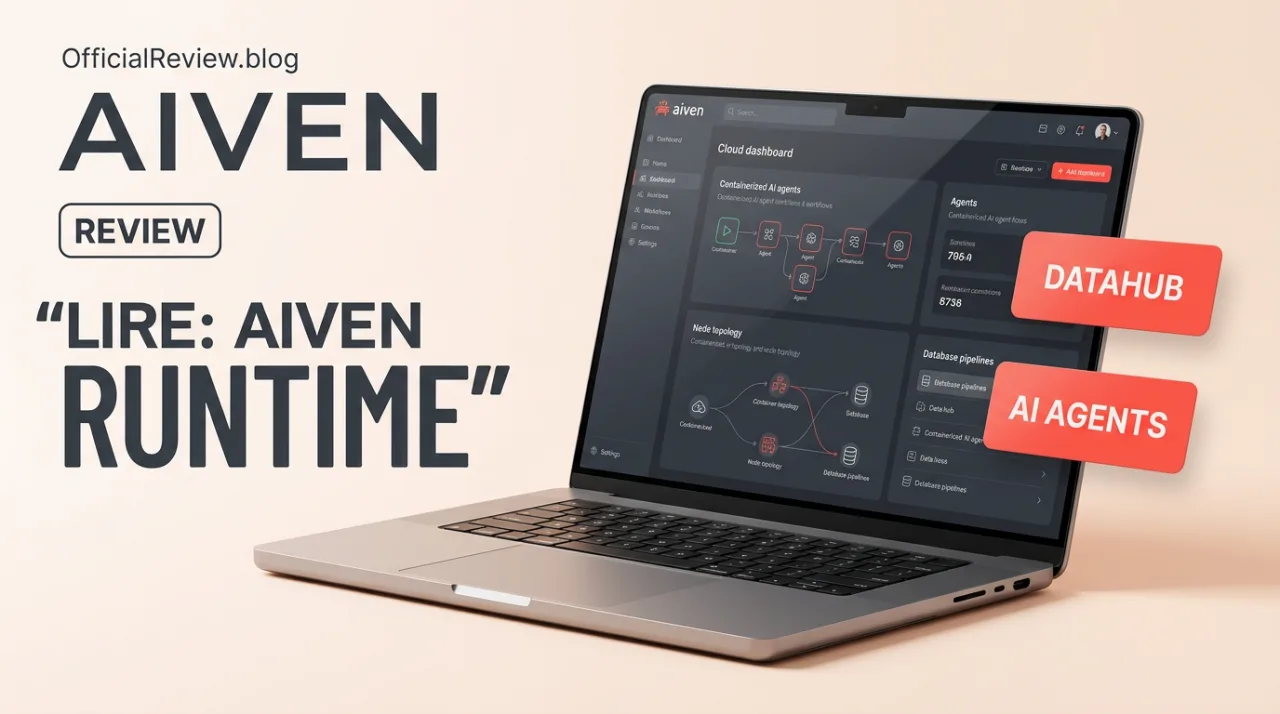
Aiven Runtime and DataHub reached general availability on September 23, 2026, as part of the company’s managed Data & AI Cloud. Runtime deploys containerized applications and agents alongside services such as PostgreSQL and Kafka within the same network boundary. DataHub supplies a managed data catalog that exposes lineage, ownership, and glossary information to agents through the Model Context Protocol.
Aiven Runtime and DataHub Core Components
Aiven Runtime, previously offered in limited availability as Aiven Apps, supports Containerfiles, Docker Compose, and Git-based deployments. It automatically manages networking, orchestration, and connections to Aiven data services on AWS and Google Cloud, with Azure support planned. Typical workloads include in-perimeter AI agents, real-time utilities, monitoring scripts, and internal tools that require low-latency access to live data without egress charges.
Aiven DataHub is a fully managed instance of the open-source DataHub Core catalog. It indexes metadata from more than 100 sources, including Aiven services and external platforms such as Snowflake, BigQuery, and dbt. The catalog delivers context to AI agents via an MCP server, enabling precise queries instead of ungrounded responses. It carries a 99.9 percent uptime SLA and has been tested at roughly 100 concurrent agents with sub-100-millisecond entity lookups and ingestion rates near 100 assets per second.
Together the two products keep data inside the secure perimeter while giving agents structured information on data meanings, lineage, and governance rules. A customer case from Dojo showed reduced dbt model issues and faster resolution times after the context layer was added. The platform also integrates with Aiven’s AI Gateway for open-model interactions and supports frameworks compatible with Claude.
Pricing Structure, Security, and Operational Limits
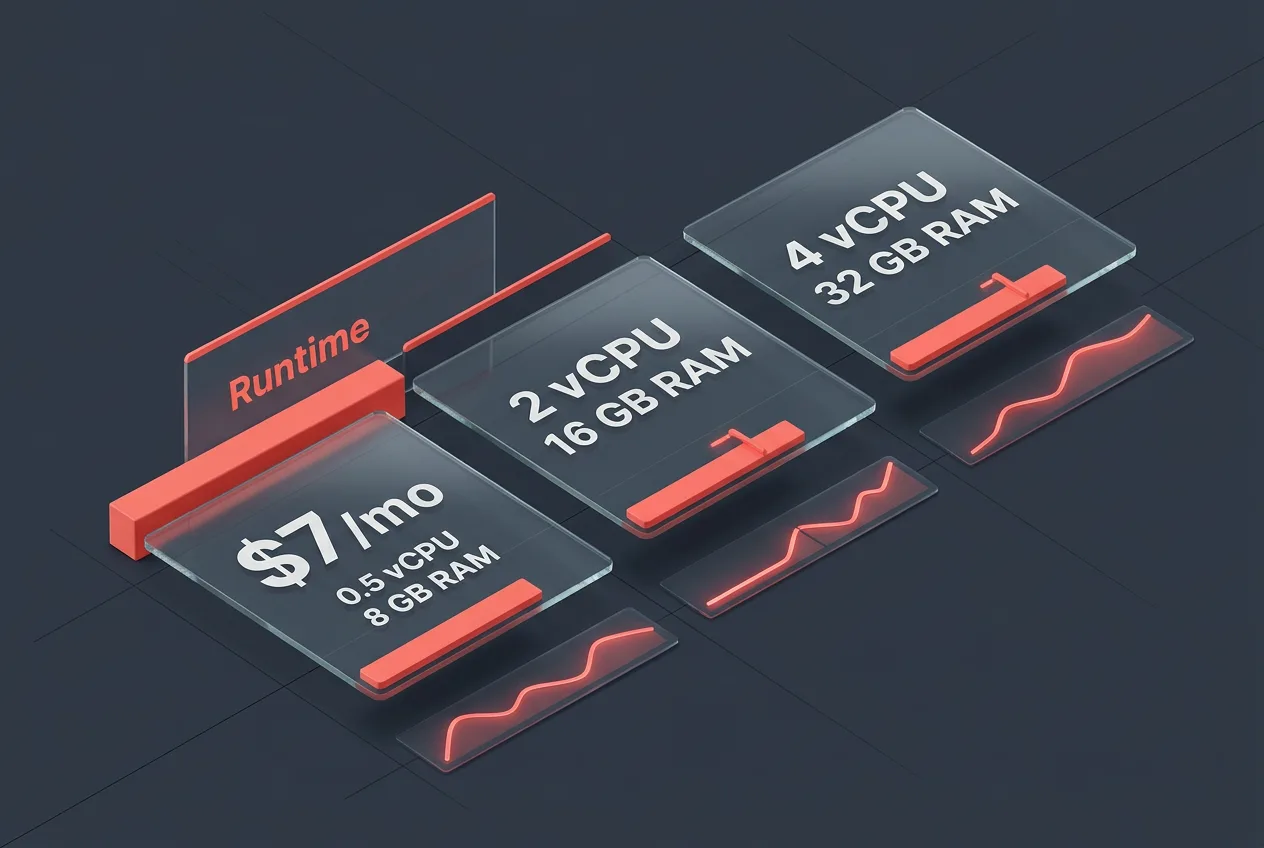
Runtime follows Aiven’s usage-based hourly model and starts at approximately seven dollars per month for the smallest Startup plan offering half a CPU and 0.25 to 8 GB RAM. Additional costs appear for transit gateways, PrivateLink, and higher resource tiers. DataHub charges a flat 2,500 dollars monthly plus the underlying infrastructure; seats remain unlimited. Standard Aiven billing covers compute, networking, backups, and operations in a single price, and services stop accruing charges when powered off.
Both products inherit Aiven’s security posture: data remains inside customer-controlled VPCs, and no proprietary forks of the underlying open-source projects are introduced. DataHub adds governance features such as glossary terms and ownership assignment. Known constraints include the absence of Azure Runtime availability at launch and the lack of published independent penetration-test results specific to the new GA components. User feedback on public forums mentions straightforward Git-based deployments but occasional confusion around add-on networking pricing.
Compared with self-managed Kubernetes on AWS or Google Cloud, Aiven Runtime removes the need for separate orchestration clusters while keeping data services in the same billing and network boundary. Against standalone data catalogs such as Amundsen or open-source DataHub, the managed Aiven version eliminates per-seat licensing and adds direct MCP exposure for agents. Relative to cloud-native AI runtimes from major providers, Aiven emphasizes portability across open-source tools rather than lock-in to proprietary model endpoints.
Limitations, Comparisons, and Final Assessment
Current limitations center on the narrow set of supported clouds for Runtime and the requirement to size infrastructure manually for DataHub workloads. No public benchmarks exist yet for large-scale agent fleets beyond the 100-user test case. Customer reports collected from DataVersity sessions and Aiven webinars note reliable context delivery but request clearer documentation on MCP query patterns.
The combination addresses a clear gap between execution environments and governed data context for production AI agents. Organizations already running Aiven data services gain the tightest integration, while those outside the ecosystem must weigh migration effort against the predictable monthly pricing and open-source foundation.
Frequently asked questions
What is the minimum monthly cost for Aiven Runtime?
The smallest Startup plan begins at roughly seven dollars per month based on hourly usage for 0.5 CPU and 0.25 GB RAM.
Does Aiven DataHub charge per user?
No. DataHub uses a flat 2,500-dollar monthly fee plus infrastructure costs with unlimited seats.
Which clouds currently support Aiven Runtime?
Runtime is available on AWS and Google Cloud; Azure support remains planned but not yet released.
How does DataHub reduce AI agent hallucinations?
It exposes metadata, lineage, and glossary entries through the Model Context Protocol so agents receive structured context instead of guessing.
Comments 8