Reflection Beam Review: 501B Open-Weight Model Architecture, Licensing, and Deployment Options
Review summary
Reflection Beam is a 501B-parameter open-weight MoE model released under Apache 2.0 with strong coding benchmarks and multiple hosted inference options.
Reflection Beam, officially Beam-1.0-501B-A23B, is an open-weight sparse Mixture-of-Experts language model from Reflection AI. It contains 501.3 billion total parameters with approximately 23.4 billion active per token and supports a 1-million-token context window. The model targets coding and agentic workloads and became available for download on October 16, 2026.
Model Architecture and Core Capabilities
The architecture consists of 52 layers, including three dense layers and 49 MoE layers that route eight experts out of 256 per token. Attention mechanisms combine gated grouped-query attention with sliding-window attention on most layers and full attention on selected layers. Training used 23.8 trillion tokens on 6,144 NVIDIA GB300 GPUs in under four weeks, followed by reinforcement learning on over 100 million rollouts.
Reflection reports the following benchmark scores at temperature 0.7 and top_p 0.99 in BF16: 81.6 percent on SWE-bench Verified, 80.1 percent on Terminal-Bench v2.1, 66.1 percent on SWE-Bench Pro v1, 90.6 percent on GPQA Diamond, and 97.7–97.8 percent on AIME 2026. The model supports configurable reasoning effort levels, tool calling with grammar constraints, and the modified Harmony chat template. An optional DFlash2 speculative decoder is available for faster inference.
Quantization options include NVFP4 at roughly 294 GB, FP8 at 503 GB, and BF16 at 1 TB for the weights. Recommended hardware includes four B200 or B300 GPUs for NVFP4 in tensor-parallelism configuration or eight H200 GPUs for FP8.
Licensing, Deployment Methods, and Safety
Weights are released under the Apache 2.0 license, which permits fine-tuning, quantization, merging, distillation, and use of outputs to train other models. Day-zero support exists in Hugging Face Transformers, vLLM, and SGLang, with additional integrations through Unsloth, Axolotl, and NVIDIA NeMo. Self-hosted users can download sharded Safetensors files directly from the Reflection organization on Hugging Face.
Hosted inference is available through Reflection API in public beta, OpenRouter at $0.25 per million input tokens and $1 per million output tokens, plus providers such as Baseten, Together, CoreWeave, Nebius, and AWS SageMaker JumpStart. An open-source Mirror CLI agent harness accompanies the release. Hardware costs for self-hosting remain the primary expense since weights are free.
The separate Beam Safety Technical Report documents an 88.9 percent refusal rate on harmful prompts and 81.5 percent compliance on harmless prompts under the Iris Safety Evaluations. Reflection rates the model “Limited” risk across systemic categories including CBRNE and cyber offense. External reviews by Gray Swan and SecureBio found isolated offensive task performance but no successful end-to-end multi-stage scenarios.
Competitor Comparison, Limitations, and Final Verdict
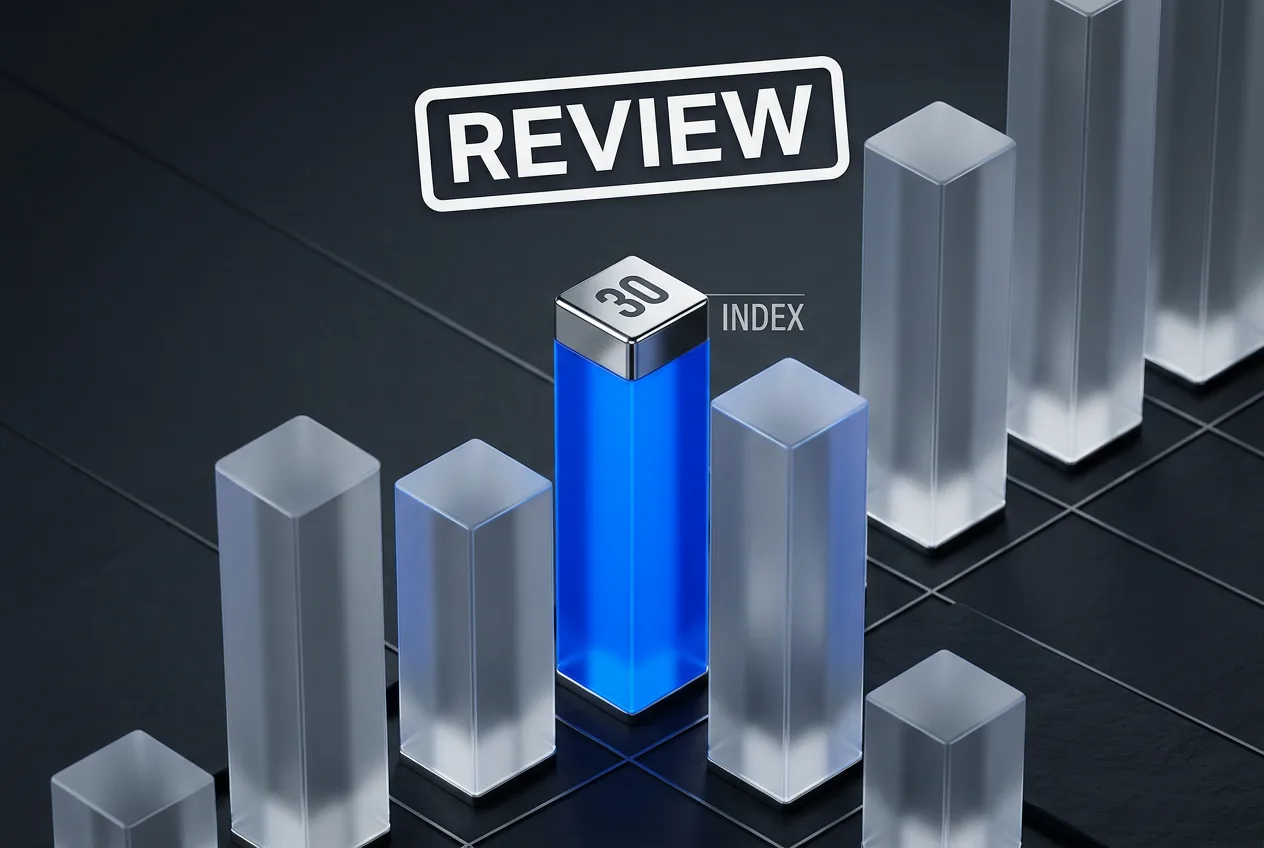
Reflection Beam places second among U.S. open-weight models on the Artificial Analysis Intelligence Index with a score of 30. On several agentic and terminal benchmarks it trails Kimi K3, DeepSeek V4.1 Flash, and Qwen 3.8 Max, yet it uses roughly three times fewer inference tokens than GLM-5.2 in Reflection’s internal framing.
| Model | Active Params | SWE-bench Verified | Context | License |
|---|---|---|---|---|
| Reflection Beam | 23.4B | 81.6% | 1M | Apache 2.0 |
| GLM-5.2 | ~70B | ~78% | 128K | Proprietary |
| DeepSeek V4.1 Flash | ~37B | 84.2% | 128K | MIT |
Public user feedback remains limited because the model launched only eleven days before this review. Early reports on Hugging Face and technical forums note strong coding performance and stable tool-calling behavior, while some users mention high memory requirements even after quantization. No widespread complaints about refusal behavior or output quality have surfaced yet.
Key limitations include the English-primary training focus, a knowledge cutoff of June 30, 2026, and substantial hardware demands for full-precision inference. Independent long-term evaluations and real-world agent deployments will determine whether the reported efficiency gains hold at scale. Overall, Reflection Beam provides a permissive open-weight option with competitive coding benchmarks, clear licensing terms, and multiple deployment paths, though its practical advantages over established closed models depend on specific workload requirements and available compute resources.
Frequently asked questions
What license does Reflection Beam use?
The model weights are released under Apache 2.0, allowing fine-tuning, quantization, merging, and use of outputs to train additional models without usage restrictions listed in the model card.
How much memory does Reflection Beam require?
Quantized versions need approximately 294 GB in NVFP4, 503 GB in FP8, and 1 TB in BF16. Four B200 GPUs or eight H200 GPUs are typical minimum hardware recommendations for inference.
Where can users run Reflection Beam?
Weights are available on Hugging Face with day-zero support in vLLM and Transformers. Hosted options include OpenRouter, Together, CoreWeave, and the Reflection API beta.
How does Reflection Beam compare on coding benchmarks?
It scores 81.6 percent on SWE-bench Verified and 80.1 percent on Terminal-Bench v2.1, placing it ahead of GLM-5.2 on some tasks but behind certain closed models on agentic benchmarks.
Comments
No comments yet. Be the first!