Architect Liquid Inference Review: Real-Time LLM Inference Auctions and Routing
Review summary
Architect Liquid Inference operates as a real-time auction platform for LLM inference requests, routing prompts to the lowest qualifying bid among verified providers.
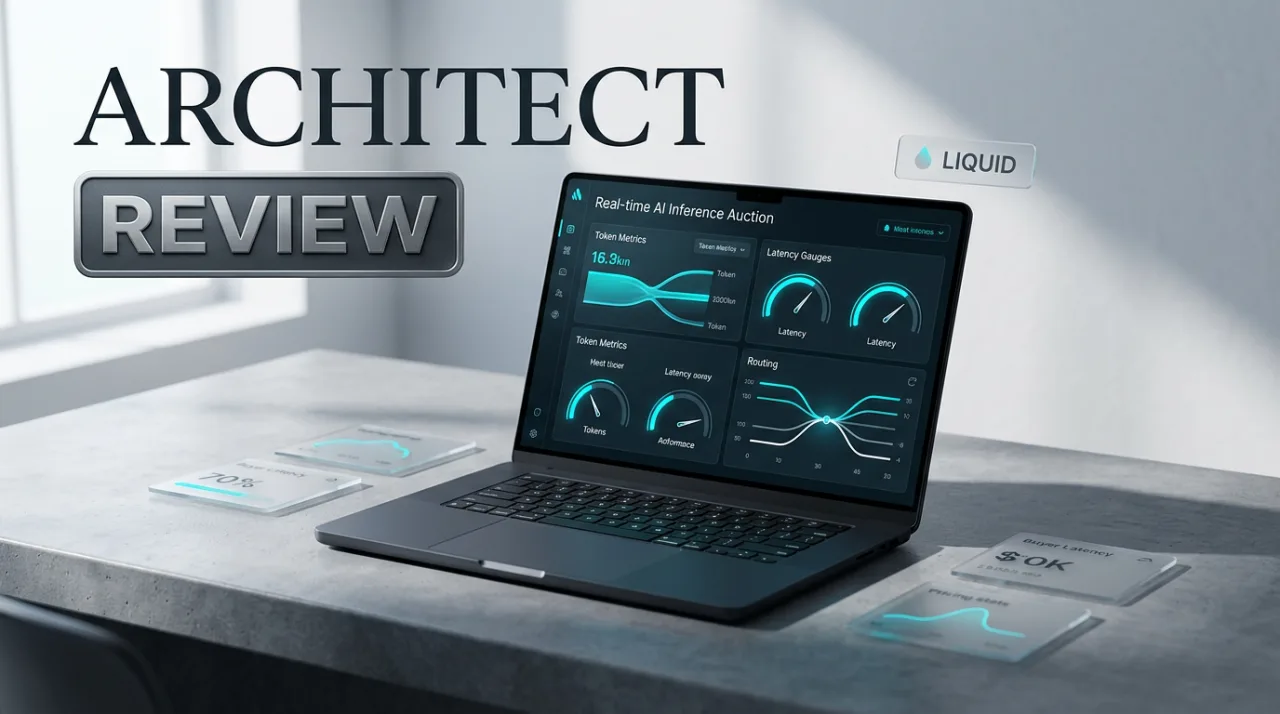
Architect Liquid Inference functions as an exchange-style marketplace that auctions each LLM inference request across independent providers. Launched in early October 2026 by Architect Financial Technologies, the platform applies live order books and pre-trade limits to model inference, allowing buyers to set rules for price, latency, and data handling. This approach differs from fixed-price routers by locking a maximum price before the first token is generated.
The service supports OpenAI- and Anthropic-compatible APIs, multi-modal models, embeddings, and prompt caching. Providers integrate in roughly three hours on average, and the network reached 28 verified participants serving more than 1,000 models within days of launch. Early data showed approximately 2 billion tokens processed and an 88 percent cache hit rate.
Architect Liquid Inference Review: Auction Mechanics, Routing, and Key Features
For every prompt the system collects real-time quotes, applies buyer-defined filters such as maximum price per job, time-to-first-token thresholds, minimum throughput, allowed regions, and zero data retention policies, then routes to the lowest qualifying bid. The selected price cap remains fixed regardless of actual usage, and billing stays metered only. Each completed job produces a receipt listing the winning provider, competition depth, and final charge.
Buyers can choose Auto routing or saved presets. The platform surfaces live order books, recent trades, and transparent market data that are uncommon among LLM APIs. It accommodates open- and closed-weight models plus tools such as Claude Code, Cursor, and Codex without requiring code changes.
Security controls center on buyer allow-lists and data-retention preferences rather than platform-level encryption claims. No major incidents have been reported since launch. Architect Financial Technologies, led by Brett Harrison, previously acquired a U.S. designated contract market for GPU futures in May 2026, indicating a derivatives-market background applied to inference.
Pricing Structure, Comparisons, Limitations, and User Feedback
The first 500 users receive a $20 inference credit. A referral program awards 20 percent of referred fees as credits and 10 percent on second-level referrals. No fixed subscription exists; costs depend entirely on winning auction prices. Early reports indicated the platform undercuts 98 percent of OpenRouter traffic on comparable requests, though actual savings vary with model demand and buyer filters.
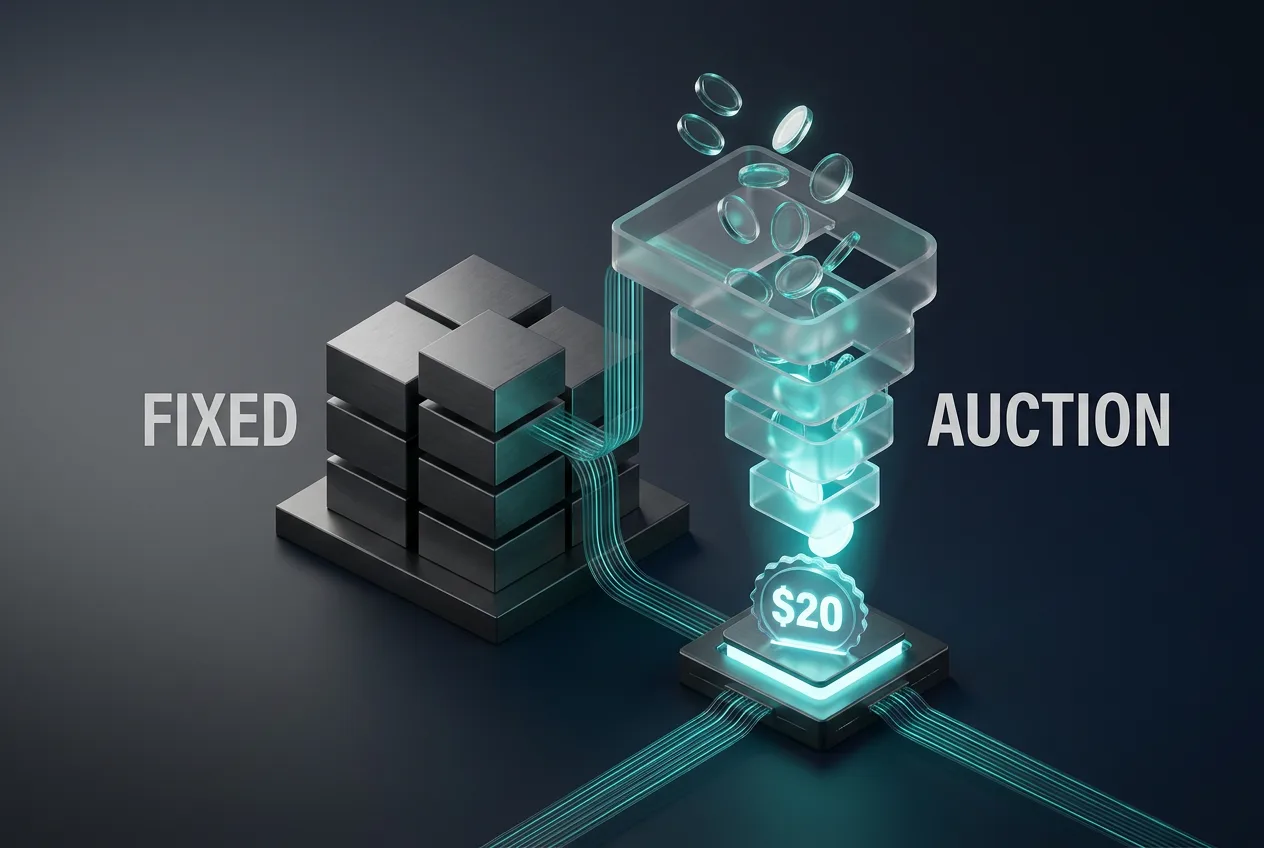
Compared with OpenRouter's price-weighted balancing and Hugging Face's hosted endpoints, Architect Liquid Inference emphasizes per-request auctions and pre-trade price caps. OpenRouter offers simpler averaging across providers, while Hugging Face focuses on open-source model hosting without live bidding. Architect provides richer public market data and explicit buyer rules for latency and data handling that the other two services handle less granularly.
| Platform | Routing Method | Price Discovery | Buyer Filters | Market Data |
|---|---|---|---|---|
| Architect Liquid Inference | Per-request auction | Live bids with cap | Price, latency, region, retention | Order books and trades |
| OpenRouter | Price-weighted balance | Averaged rates | Limited | Basic pricing tables |
| Hugging Face | Fixed endpoints | Provider-set fees | Basic | Model cards only |
Reported limitations include early-stage liquidity that may produce wider spreads on less common models and the absence of long-term pricing commitments. User feedback on public channels has noted rapid onboarding and visible cost reductions for high-volume workloads, while some complaints mention occasional routing delays during peak bidding periods. No verified regulatory actions target the inference platform itself.
Strengths, Drawbacks, and Practical Considerations
Strengths center on competitive price discovery, detailed buyer controls, and compatibility with existing API clients. The platform monetizes spare provider capacity through transparent auctions and supplies receipts that aid cost tracking. Drawbacks involve reliance on real-time provider participation and the learning curve of configuring filters for optimal results.
Developers evaluating the service should test small workloads first to observe bid depth and cache performance. The referral credits and initial free allocation reduce entry cost for initial experiments. Continued growth in provider numbers will determine whether spreads tighten across a broader model catalog.
Frequently asked questions
How does Architect Liquid Inference route requests?
The platform runs a real-time auction for each prompt, applies buyer filters for price, latency, and data rules, then directs the request to the lowest qualifying bid while locking the maximum price upfront.
What models and APIs does Architect Liquid Inference support?
It handles open- and closed-weight models, multi-modal inputs, embeddings, and prompt caching through OpenAI- and Anthropic-compatible endpoints, including compatibility with tools like Cursor and Codex.
Is there a subscription fee for Architect Liquid Inference?
No subscription is required. Costs arise only from winning auction prices on metered usage, with an initial $20 credit for the first 500 users and a referral program offering credits on referred activity.
How does Architect Liquid Inference compare to OpenRouter?
Architect uses per-request auctions with pre-trade price caps and rich market data, whereas OpenRouter relies on price-weighted balancing across providers without live bidding or granular buyer filters for latency and retention.
Comments 3