DeepSeek API Review 2026: Features, Pricing, Pros & Cons
Review summary
DeepSeek API provides two models through OpenAI-compatible endpoints with 1M token context, native vision on Flash, and tiered pricing that halves during off-peak hours.
DeepSeek API delivers two large language models through endpoints compatible with OpenAI and Anthropic formats. The service runs at api.deepseek.com and targets developers who need long context windows and agentic tool use at lower cost than frontier Western providers.
DeepSeek API Overview and Key Features
The API launched with its current V4 generation in 2026. Active models are deepseek-flash (DeepSeek-V4.1-Flash-1017, updated October 17) and deepseek-v4-pro (V4-Pro-0813). Both support 1 million token context and 384K maximum output tokens. Flash includes native vision; Pro does not. Thinking mode runs by default with selectable reasoning effort levels, while JSON mode, tool calls, and Responses API remain available on both.
Additional capabilities include chat prefix completion in beta and fill-in-the-middle completion when thinking mode is disabled. The October 17 update improved benchmark scores on agentic tasks and shortened average output length at the same price points. Weights for the Flash model received an MIT license on Hugging Face, allowing self-hosting or fine-tuning.
Search and Fetch APIs became generally available on October 17 at a flat rate of $0.75 per 1,000 successful requests. These endpoints operate independently of the chat completions path and carry initial rate limits of 5 QPS per account.
DeepSeek API Pricing, Ease of Use and Security
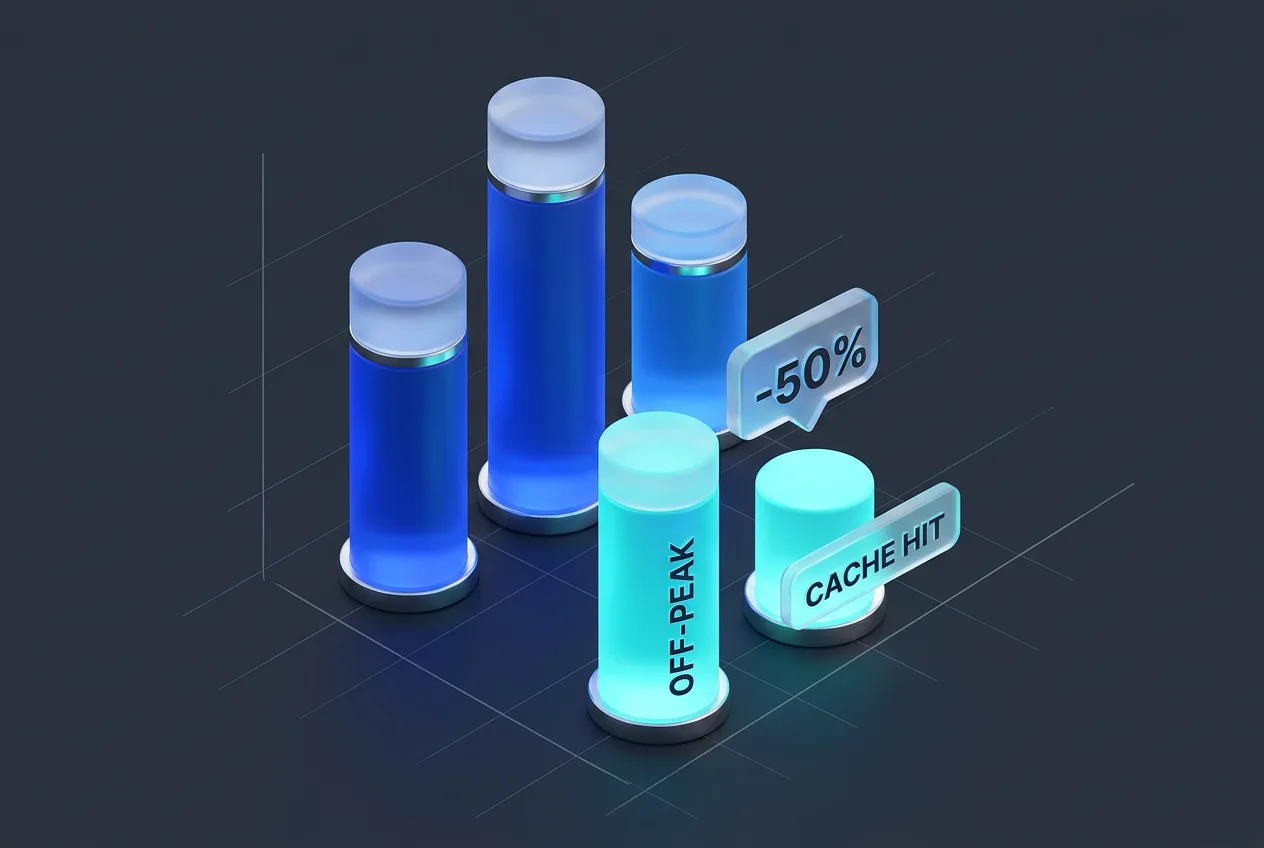
Pricing uses per-million-token rates that vary by model, cache hit status, and time of day. Peak hours run from 01:00–04:00 and 06:00–10:00 UTC on weekdays. Off-peak rates are half of peak. Flash cache-miss input costs $0.15 off-peak and $0.30 peak; output costs $0.60 and $1.20 respectively. Pro cache-miss input costs $0.66 off-peak and $1.32 peak; output costs $1.98 and $3.96. Cache hits drop to fractions of a cent for both models. Concurrency limits stand at 2,500 for Flash and 500 for Pro.
The OpenAI-compatible interface allows existing codebases to switch endpoints with minimal changes. Registration requires an API key generated through the developer console. Documentation lists explicit token limits, supported modalities, and billing examples. Data processing occurs on infrastructure located in China, which may trigger enterprise compliance reviews.
Security documentation references standard TLS encryption for API traffic and optional content filtering controls. No public incident reports detail large-scale breaches as of October 2026, yet users note that Chinese data residency rules apply by default.
DeepSeek API Pros, Cons, Comparisons and Verdict
Reviewers on AIToolTier highlight the low token prices, often five to ten times below comparable Western models, plus the availability of open weights and strong results on coding and tool-use benchmarks such as DeepSWE v1.1 at 77.0. The 1M context window combined with aggressive KV cache compression further reduces effective cost for long documents.
Drawbacks include peak-hour surcharges, potential content restrictions on politically sensitive topics, and English writing quality that trails top models on nuance and coherence. Hallucinations on niche subjects appear in user reports, and third-party benchmarks remain self-reported by the vendor.
| Model | Context | Cache-miss input (off-peak) | Output (off-peak) | Vision |
|---|---|---|---|---|
| DeepSeek Flash | 1M | $0.15 | $0.60 | Yes |
| Claude Opus 5 | 200K | $3.00 | $15.00 | Yes |
| GPT-5.6 Sol | 128K | $2.50 | $10.00 | Yes |
Common complaints mention occasional rate-limit resets during peak windows and slower support response times compared with larger providers. Positive experiences center on cost savings for high-volume agent workflows and the ability to run the open weights locally when latency or privacy requirements demand it.
Limitations include variable output length that can affect downstream parsing, the upcoming shift to paid Search API billing after November 1, and the absence of guaranteed enterprise SLAs in current documentation. Final assessment shows DeepSeek API delivers competitive agentic performance at markedly lower cost, tempered by geographic data considerations and time-of-day pricing variability.
Frequently asked questions
What are the current DeepSeek API models?
The active models are deepseek-flash with vision support and deepseek-v4-pro, both offering 1 million token context and tool-use capabilities.
How does DeepSeek API pricing change during peak hours?
Peak rates run at double the off-peak rates for input and output tokens on weekdays between 01:00–04:00 and 06:00–10:00 UTC.
Does DeepSeek store data outside China?
All processing occurs on infrastructure in China, which may require compliance checks for organizations with data residency rules.
Are DeepSeek weights available for self-hosting?
The Flash model weights carry an MIT license and can be downloaded from Hugging Face for local deployment or fine-tuning.
Comments 6