Fiserv Digital Asset Platform Review: Stablecoin Issuance, Custody, and Bank Use Cases
Review summary
Fiserv launched its Digital Asset Platform on October 1, 2026, to let banks issue and settle stablecoins through existing systems.
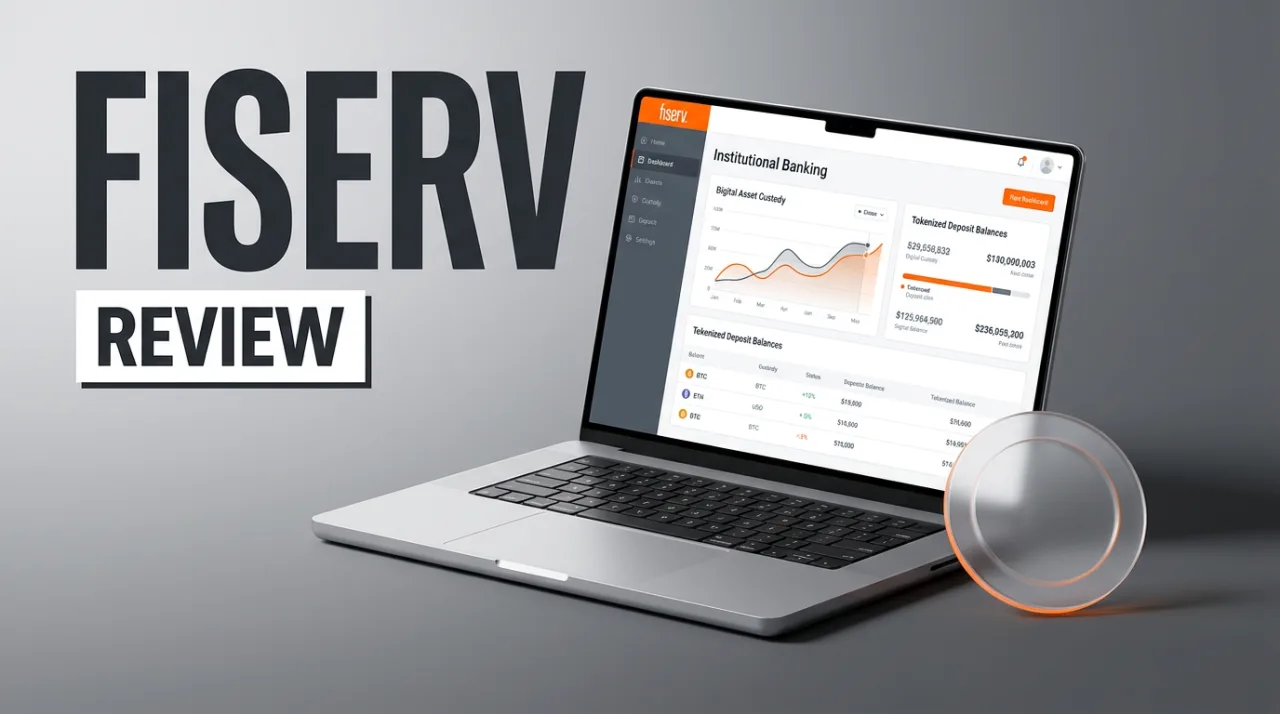
The Fiserv Digital Asset Platform went live on October 1, 2026, and supplies white-label tools for financial institutions to issue, custody, and settle stablecoins while connecting to their core banking software. The first production example is Roughrider Coin, a dollar-backed stablecoin from the Bank of North Dakota that runs on Solana and uses VersaBank USA for reserves and minting. Institutions access the platform through Fiserv Commercial Center without new wallets or separate interfaces.
Overview of the Fiserv Digital Asset Platform
Fiserv announced the platform in October 2025 after earlier plans for its own FIUSD stablecoin. The service targets the more than 10,000 financial institutions already using Fiserv systems and initially serves over 90 banks and credit unions in North Dakota. It processes tokenized deposits and stablecoin transfers with reported chain latency near 400 milliseconds, replacing overnight ACH cycles for permitted participants. Fireblocks supplies the tokenization layer, and all activity stays permissioned among licensed institutions rather than open to retail users.
The platform supports stablecoin card issuance, cross-border payments, programmable commerce, and tokenized deposits alongside standard dollar accounts. Compliance controls for AML, OFAC, and Travel Rule requirements run through Fiserv infrastructure, with VersaBank handling one-to-one USD reserves for Roughrider Coin. No public data on transaction volumes, total stablecoin supply, or reserve balances has been released as of mid-October 2026.
Key Features, Integration, and Current Limitations
Institutions gain near-real-time settlement, treasury automation, and interoperability with existing fiat rails without building new blockchain connections. The system integrates directly with Fiserv’s Commercial Center and Finxact core processing, so banks avoid separate applications. Early qualitative feedback from North Dakota participants notes faster interbank payments, yet no cost comparisons or performance benchmarks have been published.

Regulatory references point to U.S. frameworks such as the GENIUS Act for state-qualified issuers, with VersaBank as the OCC-chartered custodian. Expansion plans include broader adoption beyond the North Dakota pilot and continued work on FIUSD, though no launch date for the latter has been confirmed. The platform remains limited to financial institutions and does not offer retail access or public wallet functionality.
Adoption Status and Bank Use Cases
More than 90 North Dakota institutions can participate on a voluntary basis for payments and settlement. The Roughrider Coin serves as the initial proof-of-concept, allowing state-chartered banks to test tokenized deposits in a controlled environment. Longer-term goals include scaling the same infrastructure across Fiserv’s wider client base for global dollar accounts and additional tokenized products.
Because no transaction volumes or reserve totals are public, the scale of current activity remains unclear. The platform’s design prioritizes compliance and integration over open-market features, which distinguishes it from retail-focused stablecoin issuers. Future updates may add measurable performance data and wider geographic reach once the North Dakota pilot matures.
Frequently asked questions
When did the Fiserv Digital Asset Platform launch?
The platform went live on October 1, 2026, initially for financial institution clients with the Roughrider Coin as the first live stablecoin.
Which banks currently use the Fiserv platform?
Over 90 banks and credit unions in North Dakota have access through the Bank of North Dakota’s Roughrider Coin for interbank settlement.
Does the platform support retail users?
No. Access remains restricted to licensed financial institutions through existing Fiserv Commercial Center connections.
What blockchain does Roughrider Coin use?
Transactions run on Solana with tokenization and infrastructure provided by Fireblocks and reserves managed by VersaBank USA.
Comments 1