Gemini 4 Carbon Review: Pricing, Context Limits, and Enterprise Deployment
Review summary
Google DeepMind released Gemini 4 Carbon on October 28, 2026, with strong cybersecurity performance and agentic capabilities but restricted access during initial rollout.
Google DeepMind introduced Gemini 4 Carbon on October 28, 2026, as the strongest model in its Gemini 4 family. The release followed Gemini 4 Argon by roughly two weeks and targets high-stakes cybersecurity and long-horizon agentic workflows. Independent evaluators report a 1,048,576-token unified context window and multimodal input support.
Gemini 4 Carbon Capabilities and Performance
The model leads the Artificial Analysis Intelligence Index v5.0 with a score of 59, ahead of Claude Opus 5.5 at 58 and GPT-6 Astra at 57. It records 88.2 percent on SEC-bench Pro for vulnerability discovery, 54.8 percent on ExploitGym for exploitation tasks, and 71.0 percent on CWE-bench for patching. Internal Google tests show more than twice the secure code generation rate compared with Argon and ten times better high-quality patches on Chrome codebases.
Safety metrics include zero successful attacks on Gray Swan indirect prompt injection tests and zero successful cheating on Terminal-Bench 4.0. The model also shows an approximately 80 percent drop in high-severity misalignment alerts during internal monitoring. These results come from Google-reported benchmarks and third-party evaluations conducted without additional guardrails in some cases.
Google positions the model for autonomous multi-day agent workflows such as root-causing and patching bugs across large codebases. It also emphasizes vulnerability discovery, validation, remediation, secure code generation, and penetration testing. Additional potential uses include full-stack web development and multimodal analysis in scientific domains.
Pricing, Access, and Context Window
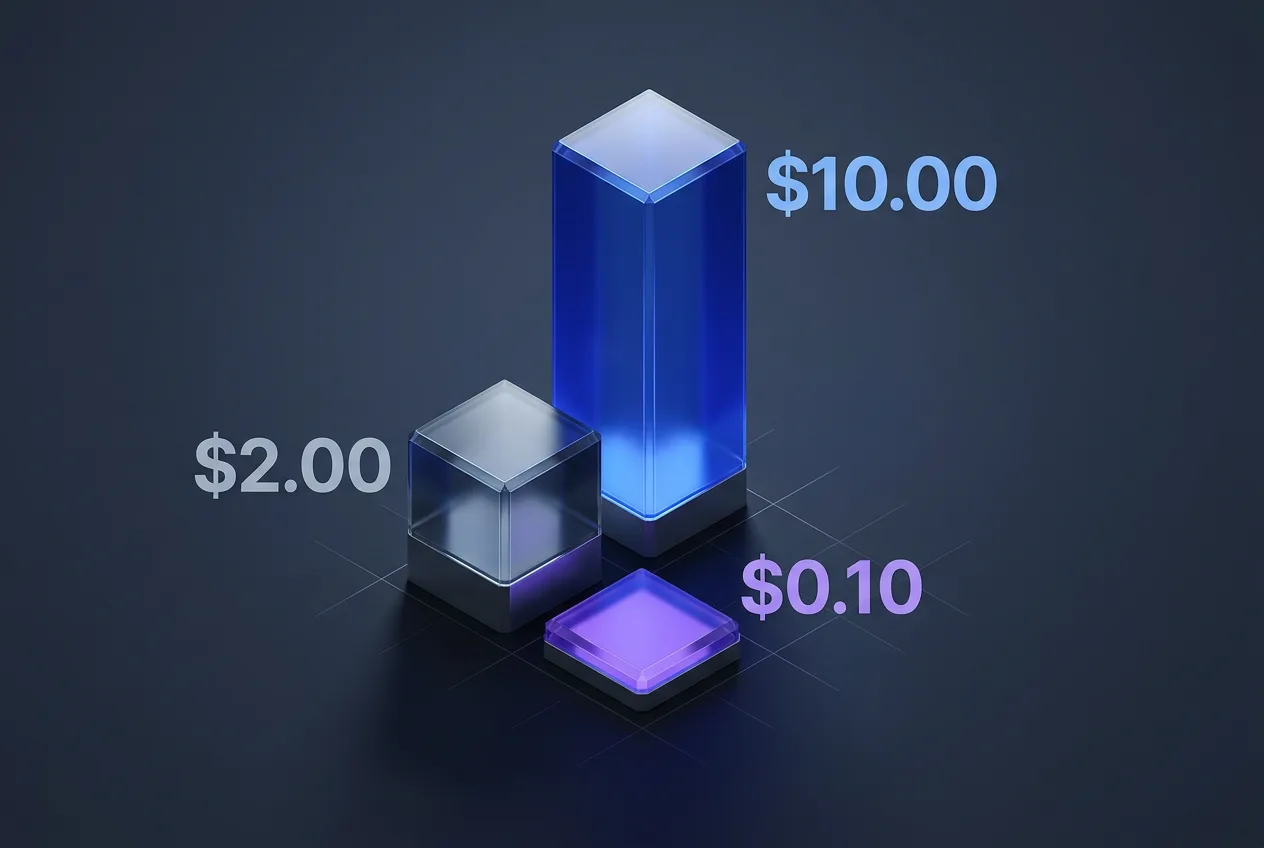
Introductory pricing matches the earlier Argon model at $2 per million input tokens and $10 per million output tokens. Cached input tokens receive a 95 percent discount to approximately $0.10 per million. Google expects rates to rise to $4 and $20 after the introductory period, producing a blended cost near $8 per million tokens at standard rates. The exact end date for Carbon's introductory pricing remains unspecified.
Availability remains limited to a subset of cyber defenders and trusted partners through the Fairwind Program. No general developer, enterprise, or consumer access date has been announced, and no public API model ID exists yet. Google continues to collect feedback on guardrails while participating in U.S. voluntary pre-release testing.
Evaluators at Artificial Analysis and Vals confirm a 1,048,576-token unified context window that includes input, thinking, and output tokens. The model accepts text, image, video, and speech inputs while producing text outputs. Google announcements do not specify exact limits.
Enterprise Use Cases and Current Limitations
Early enterprise applications center on cybersecurity defense and long-running software engineering tasks. Organizations with access can test autonomous patching of large codebases and systematic vulnerability remediation. The model also supports extended agentic sequences that span multiple days of iterative work.
Key limitations include the absence of broad API access and the lack of a published model card with full technical specifications. Google has not released firm timelines for wider availability beyond the statement that expansion will occur as soon as possible after feedback collection. Users should expect continued iteration on guardrails before general release.
Compared with Claude Opus 5.5 and GPT-6 Astra, Gemini 4 Carbon shows measurable gains on security-specific benchmarks and agentic coding arenas. Its context window matches the largest reported windows among current frontier models, though real-world performance depends on the phased rollout schedule.
Frequently asked questions
When was Gemini 4 Carbon announced?
Google DeepMind announced Gemini 4 Carbon on October 28, 2026. It followed the release of Gemini 4 Argon by about two weeks and forms part of the rapid Gemini 4 family iteration.
What is the context window size for Gemini 4 Carbon?
Independent evaluators report a 1,048,576-token unified context window that covers input, thinking, and output. The model supports multimodal inputs including text, image, video, and speech.
How much does Gemini 4 Carbon cost during the introductory period?
Pricing stands at $2 per million input tokens and $10 per million output tokens. Cached input receives a 95 percent discount. Rates are expected to increase to $4 and $20 after the introductory phase.
Who can currently access Gemini 4 Carbon?
Access remains limited to a subset of cyber defenders and trusted partners through the Fairwind Program. No general developer or enterprise API access date has been set.
Comments 1