Healthleap Review: AI Agents for Inpatient Record Screening
Review summary
Healthleap uses AI to scan adult inpatient EHRs nightly and flag overlooked risks such as malnutrition. This review examines its features, results from live deployments, and constraints.
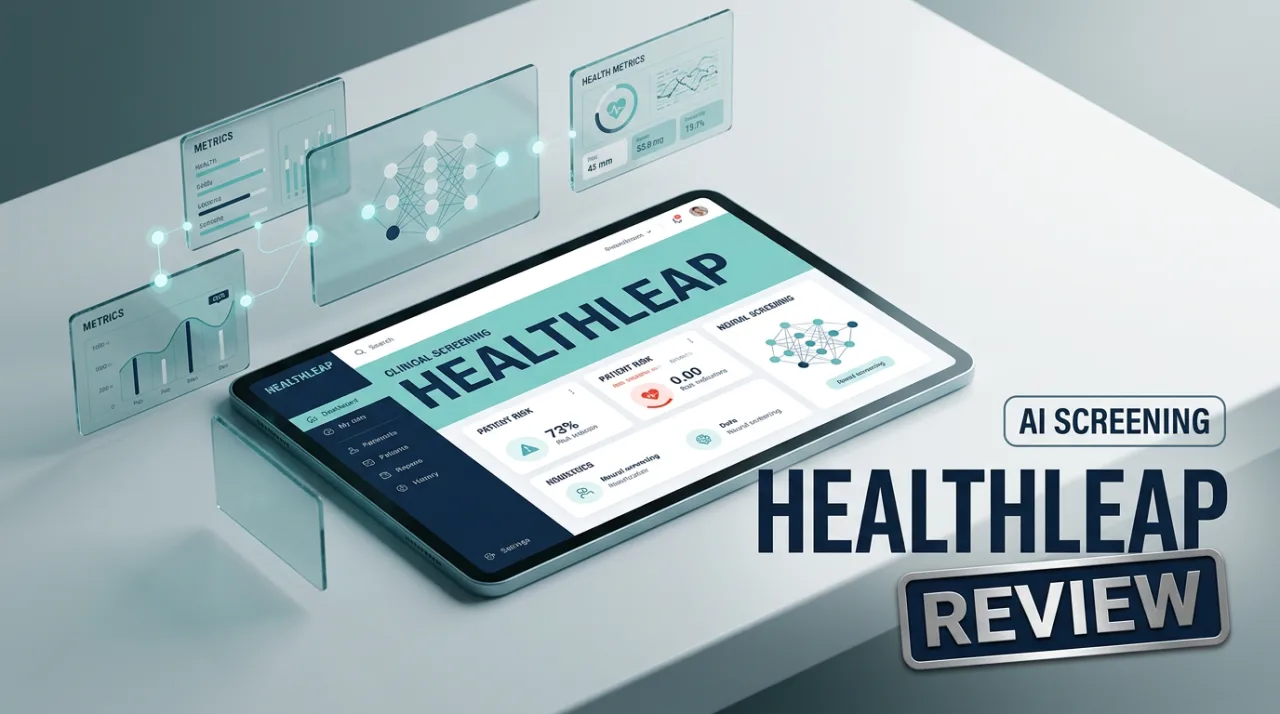
Healthleap is a clinical AI platform launched in 2022 that connects to hospital electronic health records and screens every adult inpatient each night. It identifies patients at elevated risk for conditions missed by standard admission checks, starting with malnutrition and expanding to others. The system produces risk scores and ranked worklists that integrate directly into existing EHR workflows for morning clinician review.
The platform was founded by siblings Josiah Meyer and Jemima Meyer in South Africa before relocating to San Francisco. Richard Riggs, MD, former Cedars-Sinai chief medical officer, serves as chief medical officer. As of October 2026 the company operates in more than fifty hospitals across systems including Penn Medicine, Houston Methodist, Cedars-Sinai, Emory Healthcare, and Intermountain.
Core Capabilities and Daily Workflow
Healthleap pulls both structured data such as labs, vitals, medications, and orders and unstructured notes that mention weight loss, appetite changes, or swallowing issues. Language models extract signals from the free-text portions and combine them with numeric values to calculate daily risk scores on a zero-to-ten scale. The output appears in care-team dashboards and prioritizes patients for follow-up, allowing dietitians and physicians to focus on cases that static screening tools often overlook in sedated or confused individuals.
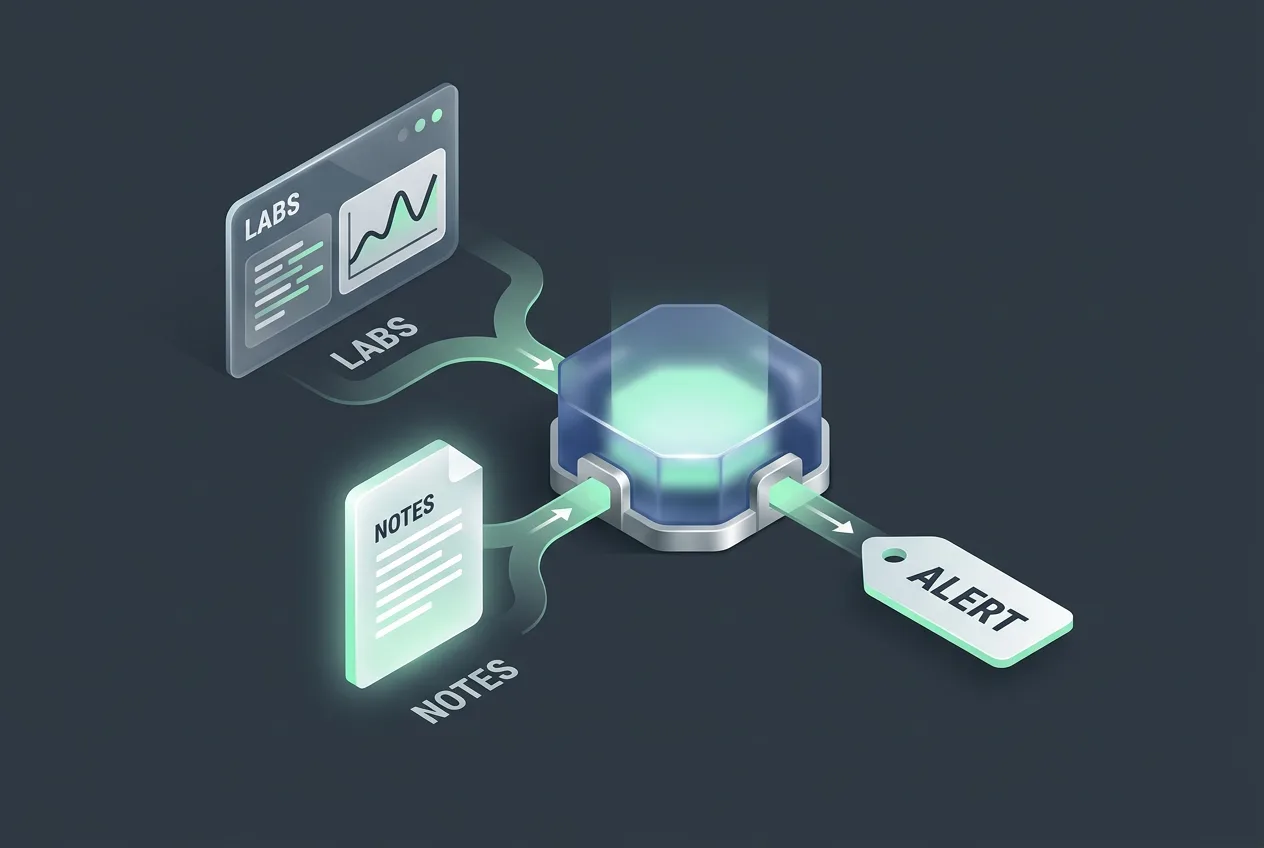
Current screening covers malnutrition and delirium, with models for aspiration pneumonia, pressure ulcers, and CHF readmission risk in validation. The company targets more than forty conditions over time. A peer-reviewed study published in Applied Clinical Informatics in 2025 examined 106,449 patients across 166,000 admissions and reported AUROC values of 0.92 on day one rising to 0.95 over the full stay. The model showed 88 percent higher sensitivity than the nurse-administered modified Malnutrition Screening Tool and flagged cases a mean of four days earlier.
Practical results reported by customers include a 39 percent rise in identified and treated malnutrition cases at one network and an $11 million incremental revenue figure tied to improved documentation. One Penn Medicine site recorded $23.8 million in annualized impact from higher reimbursement and 8,632 bed-days saved. Every live customer has achieved at least five times ROI according to company data, with some exceeding twenty times.
- Connects to major EHR systems and runs analysis on 100 percent of adult inpatients nightly.
- Generates trend lines and risk scores that update daily for the care team.
- Outputs feed directly into existing order sets and documentation workflows without new logins.
Contracts, Security, and Performance Comparisons
Contracts run three years and combine per-licensed-bed fees with outcome-based components. Exact per-bed pricing is not publicly disclosed. The platform is HIPAA compliant and SOC 2 certified. No public reports of data incidents have surfaced since launch.
Public user reviews remain limited because the product serves enterprise hospital systems rather than individual clinicians. Available deployment feedback centers on workflow integration speed and the volume of actionable cases surfaced each morning. Some sites note initial tuning required to align risk thresholds with local documentation practices.
| Metric | Healthleap AI | Traditional MST Screening |
|---|---|---|
| Sensitivity | 88% higher | Baseline |
| Mean detection lead time | 4 days earlier | Standard timing |
| AUROC day 1 | 0.92 | Not applicable |
| Annualized impact (example site) | $23.8M | Not reported |
Compared with manual nurse screening tools, the AI processes the full record set each night and captures signals that appear after admission. Relative to other inpatient AI vendors focused on imaging or alerts, Healthleap emphasizes nutrition and condition-specific risk lists that feed existing care pathways rather than generating new alerts outside the EHR.
Limitations include restriction to adult inpatients at present and reliance on the quality of existing EHR documentation. Expansion to outpatient settings is planned but not yet live. The outcome-based contract elements require hospitals to track specific quality and revenue metrics over the multi-year term.
Limitations and Current Standing
Healthleap does not provide diagnoses or treatment recommendations. All flagged cases require clinician review and confirmation. The platform currently operates only inside hospital walls; outpatient and home-care extensions remain in development. Customer growth accelerated from three partners to more than fifty within a single year, supported by $38 million in funding announced in October 2026.
The combination of peer-reviewed validation, documented revenue impact at multiple sites, and direct EHR integration distinguishes the offering from earlier rule-based screening methods. Continued condition expansion and broader system-wide rollouts will determine long-term reach.
Frequently asked questions
How does Healthleap integrate with existing hospital systems?
Healthleap connects directly to major EHR platforms and places risk scores and worklists inside the same dashboards clinicians already use. No separate login or portal is required.
What conditions does Healthleap currently screen for?
Live screening covers malnutrition and delirium. Additional models for aspiration pneumonia, pressure ulcers, and CHF readmission risk are in validation or early rollout.
What evidence supports Healthleap performance claims?
A 2025 peer-reviewed study in Applied Clinical Informatics analyzed over 106,000 patients and reported AUROC values up to 0.95 along with 88 percent higher sensitivity than standard nurse screening.
Are there published customer reviews of Healthleap?
Detailed public reviews from individual users are scarce because the product is sold to hospital systems. Reported outcomes focus on revenue impact and case identification rates at enterprise deployments.
Comments 5