Meta Muse Spark Open Review 2026: Features, Pricing, Pros & Cons
Review summary
Meta released the 816-billion-parameter Muse Spark Open model on October 15, 2026. This review examines its architecture, access options, performance data, and practical constraints.

Meta Muse Spark Open is an 816-billion-parameter open-weight mixture-of-experts model released on October 15, 2026. The model uses 42 billion active parameters per token, supports a 1-million-token context window, and accepts text, image, video, and audio inputs while generating text outputs. It targets coding, agentic workflows, and long-horizon reasoning tasks.
Weights are available on Hugging Face under the Muse Model License. Meta positions the release as the strongest U.S. open-weight model at launch, though independent benchmarks remain limited.
Architecture, Features, and Performance Data
The model contains 62 layers with 256 experts per layer and routes 8 experts per token. A 1.8-billion-parameter perception encoder handles multimodal inputs. Users can select reasoning effort levels from low to xhigh, with xhigh set as default. The model ships in BF16 format requiring roughly 1.6 TB of memory and an NVFP4 quantized version at approximately 530 GB.
Meta-reported scores include 89.2 on MCP-Atlas for tool use and 61.8 on JobBench for office tasks. On Terminal-Bench 2.1 it reaches 76.4, trailing Kimi K3. The Artificial Analysis Intelligence Index lists it at 39, below GLM 5.3 at roughly 45. Safety post-training reduced jailbreak rates compared with the base family, according to early coverage from VentureBeat and eesel.ai.
Multimodal support covers image, video, and audio understanding but does not extend to image or video generation. The model runs through standard engines including vLLM, SGLang, llama.cpp, and MLX.
Pricing, Hardware, License, and Comparisons
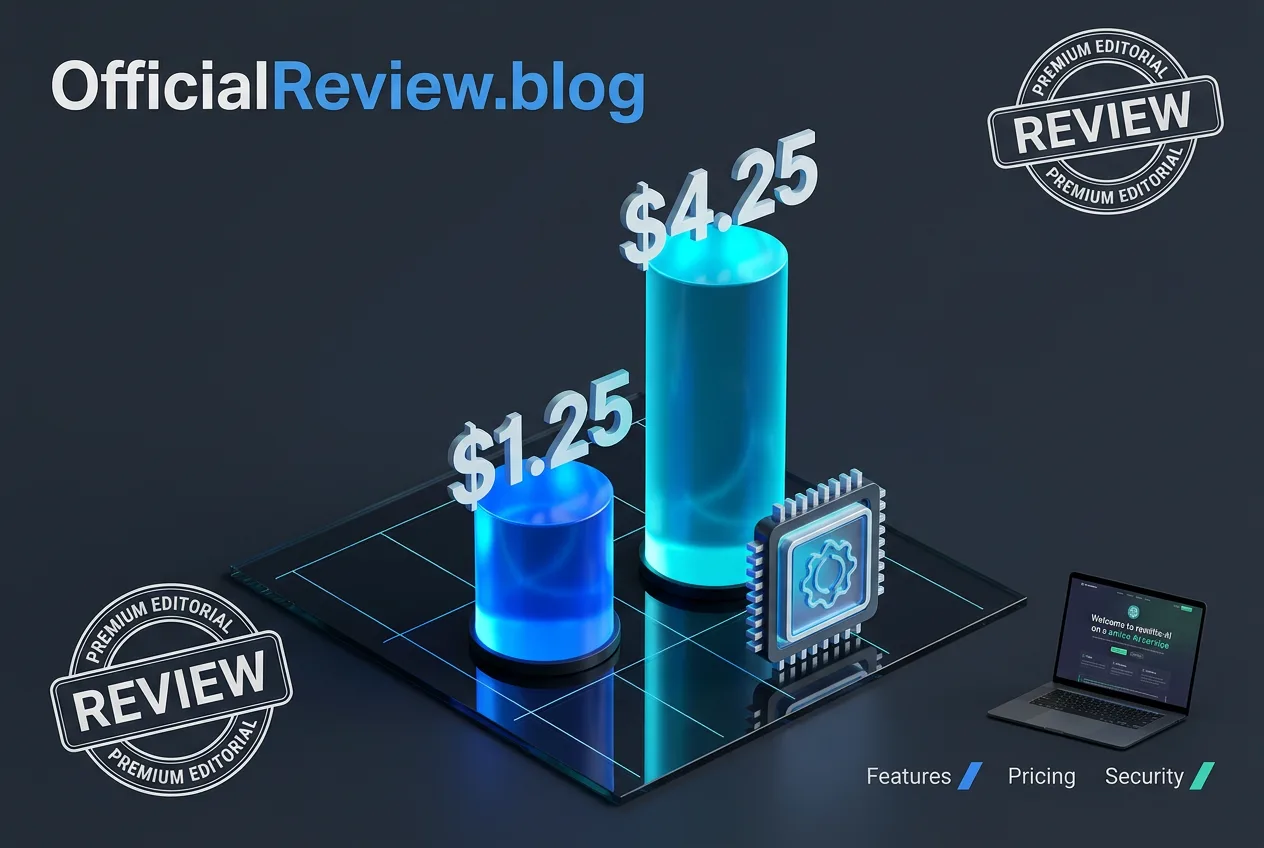
Weights download at no cost. Hosted inference on platforms such as OpenRouter, Fireworks AI, Together AI, and Baseten costs about $1.25 per million input tokens and $4.25 per million output tokens, with cached input at roughly $0.15. Local execution on two paired M5 Ultra Mac Studios with 512 GB unified memory each provides around 1 TB total memory and reported speeds of 25 to 37 tokens per second. Four 256 GB Mac Studios represent an alternative configuration estimated at $38,000 to $43,000. Single-consumer desktops cannot run the model at full capability.
The Muse Model License permits modification, fine-tuning, and commercial distribution. Providers exceeding $20 million in annual gross revenue must notify Meta and sign a separate agreement. Attribution as “Built with Muse Spark Open” is required in interfaces and documentation. Military uses and presenting outputs as human-generated content are prohibited. The license is not OSI-approved.
| Model | Active Params | Context | Multimodal | License Type | Hardware Barrier |
|---|---|---|---|---|---|
| Meta Muse Spark Open | 42B | 1M | Input only | Muse Model License | ~530 GB NVFP4 |
| GLM 5.3 | Not disclosed | 128K | Text primary | Open weights | High-end GPUs |
| Kimi K3 | Not disclosed | 200K | Text primary | Proprietary | Cloud only |
Early public feedback on Hugging Face and tech forums notes strong agentic performance alongside complaints about memory demands and the attribution clause. No widespread user-review aggregates exist yet because the model launched only four days before this review. Independent verification of benchmark numbers is still underway.
Limitations include trailing scores on certain coding benchmarks, the high cost of desktop-class hardware, and license restrictions that exceed those of Apache 2.0. The model does not generate images or video. Future updates have not been announced in initial coverage.
Frequently asked questions
What is the parameter count of Meta Muse Spark Open?
The model has 816 billion total parameters with 42 billion active per token in its mixture-of-experts architecture.
Can Meta Muse Spark Open run on a single consumer GPU?
No. The quantized version requires at least 530 GB of memory, which exceeds typical single-desktop configurations.
Is the Muse Model License fully open source?
No. It includes attribution requirements and revenue-based notification rules and is not OSI-approved.
How does Meta Muse Spark Open compare on coding benchmarks?
It scores 76.4 on Terminal-Bench 2.1, below Kimi K3 at 85.0, though it leads on tool-use and office-task benchmarks.
Where can users download the weights?
Weights are hosted on Hugging Face and additional platforms under the Muse Model License released October 15, 2026.
Comments 8