MEXC Innovation Zone Review: Listings Volume, Fees, and Volatility Warnings
Review summary
MEXC lists hundreds of new tokens through its Innovation Zone each quarter, with specific maker and taker fees that differ from standard pairs and carry volatility alerts.
MEXC Innovation Zone review shows that the section serves as the primary entry point for high-volatility and emerging tokens on the MEXC exchange. Projects typically debut here before potential migration to other zones. The platform reported 135 new tokens listed in March 2026 and 399 across Q1 2026, with many appearing first on MEXC among major centralized exchanges.
October 2026 examples include spot listings for CHOMP, DNA, YVE, and DRV, plus futures pairs such as DOPEUSDT launched on October 16 with 1-20x leverage. Every listing includes a volatility warning, and underperforming assets move to the Assessment Zone for a 30- to 60-day review before possible delisting.
MEXC Innovation Zone Features and Trading Options
The zone supports spot trading with grid bots, futures grid strategies, copy trading, and airdrop events linked to many new listings. Pre-market and OTC access exists for selected tokens. The broader platform tracks between 2,800 and 3,000 cryptocurrencies, with monthly Proof of Reserves publications showing October 2026 coverage ratios of 294 percent for BTC and 122 percent for USDT.
Futures Innovation Zone trading, introduced around March 2026, operates without API support and carries higher fees than standard perpetual pairs. Tokens that fail performance thresholds receive an ST tag, triggering a three-day notice period followed by a 30-day withdrawal window. Users monitor official announcements for migrations between the Innovation Zone, MEME+ section, and Assessment Zone.
Practical workflow involves placing limit orders to benefit from zero maker fees on spot pairs, though liquidity on long-tail assets can produce wider spreads compared with established tokens. The platform restricts access for users in India, Japan, Russia, and several other jurisdictions.
MEXC Trading Fees, Comparisons, and Reported Limitations
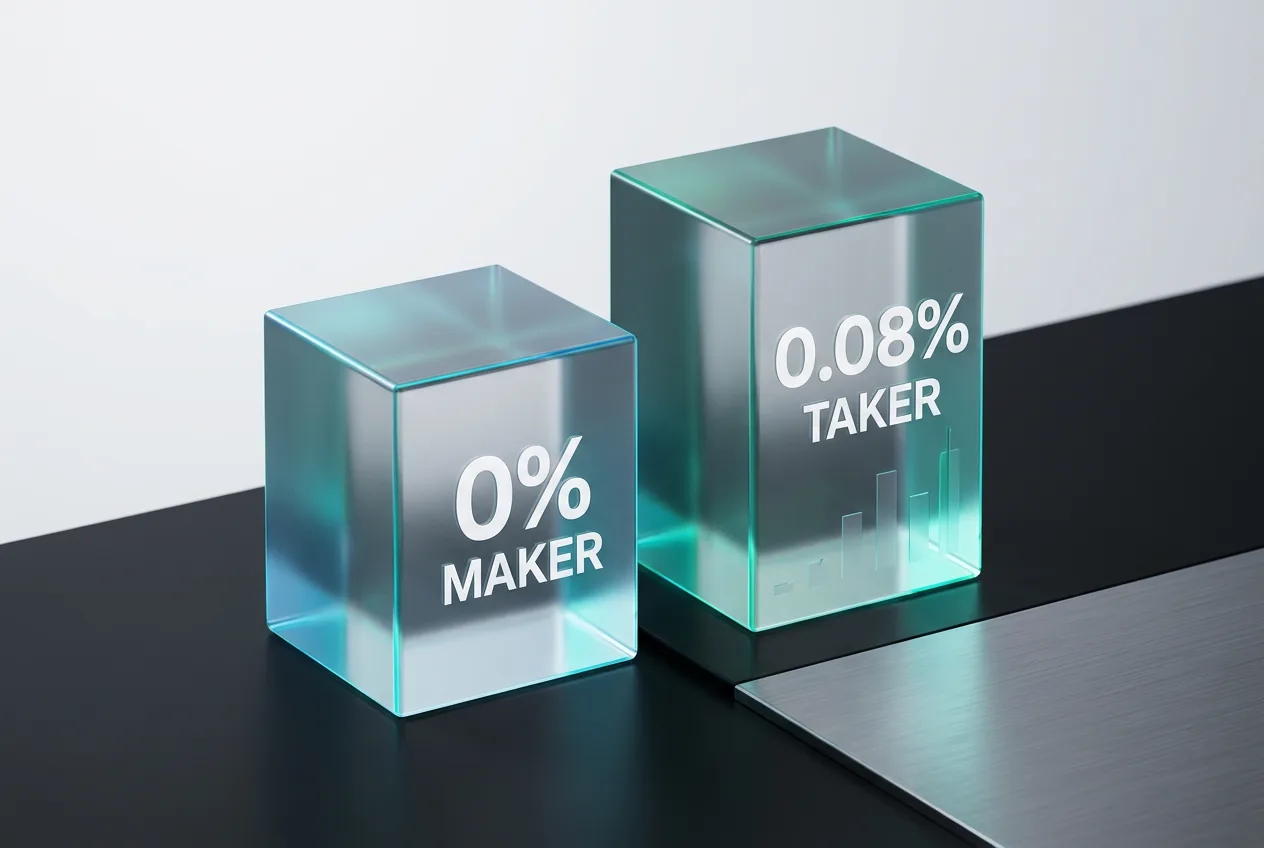
Spot fees in the Innovation Zone stand at 0 percent maker and 0.08 percent taker following the September 30, 2026 adjustment. The Assessment Zone applies 0 percent maker and 0.20 percent taker, while standard platform pairs remain at 0 percent maker and 0.05 percent taker. Futures Innovation Zone rates are 0.04 percent maker and 0.10 percent taker.
| Zone | Maker Fee | Taker Fee | Notes |
|---|---|---|---|
| Innovation Zone (Spot) | 0% | 0.08% | Post-Sep 2026 rates for USDT pairs |
| Assessment Zone (Spot) | 0% | 0.20% | Higher taker during review |
| Standard Spot | 0% | 0.05% | MX token discount may reduce taker further |
| Futures Innovation Zone | 0.04% | 0.10% | No API trading supported |
Compared with other exchanges that list new tokens, MEXC emphasizes earlier availability but provides thinner order books on many pairs. Binance and Bybit typically list fewer assets per quarter and apply different fee tiers without dedicated volatility zones. Coinbase lists even fewer emerging tokens and maintains stricter listing criteria.
Common user complaints center on rapid price swings after listing and occasional low liquidity that widens spreads. Positive reports highlight the speed of new token access and the zero maker fee incentive for limit orders. Official sources do not publish aggregated user satisfaction scores, so individual experiences vary by trading volume and asset selection.
Limitations include restricted API access in the futures zone, geographic blocks, and the possibility of sudden delistings after short review periods. Traders should verify current pair status directly on the exchange before committing funds, as fee structures and zone assignments can change with short notice.
Frequently asked questions
What fees apply in the MEXC Innovation Zone after September 2026?
Spot pairs carry 0 percent maker and 0.08 percent taker fees. Futures Innovation Zone pairs carry 0.04 percent maker and 0.10 percent taker fees. Rates differ from standard platform pairs and the Assessment Zone.
How many new tokens does MEXC list through the Innovation Zone?
The exchange listed 135 tokens in March 2026 and 399 across Q1 2026. October 2026 additions included CHOMP, DNA, YVE, DRV on spot and DOPEUSDT on futures.
What happens to tokens that underperform in the Innovation Zone?
Underperforming tokens move to the Assessment Zone for 30 to 60 days. Persistent failures receive an ST tag, followed by a three-day notice and a 30-day withdrawal window before delisting.
Does the MEXC Innovation Zone support API trading?
API trading is not supported inside the Futures Innovation Zone. Standard spot and futures sections outside the zone allow API orders at separate fee rates.
Comments 7