MiniMax M3.1 Flash Review: Multimodal Model Capabilities, API Access, and Pricing
Review summary
MiniMax M3.1 Flash offers 1M-token context and native multimodal input at competitive rates, though independent tests flag a 93% hallucination rate on factual queries.
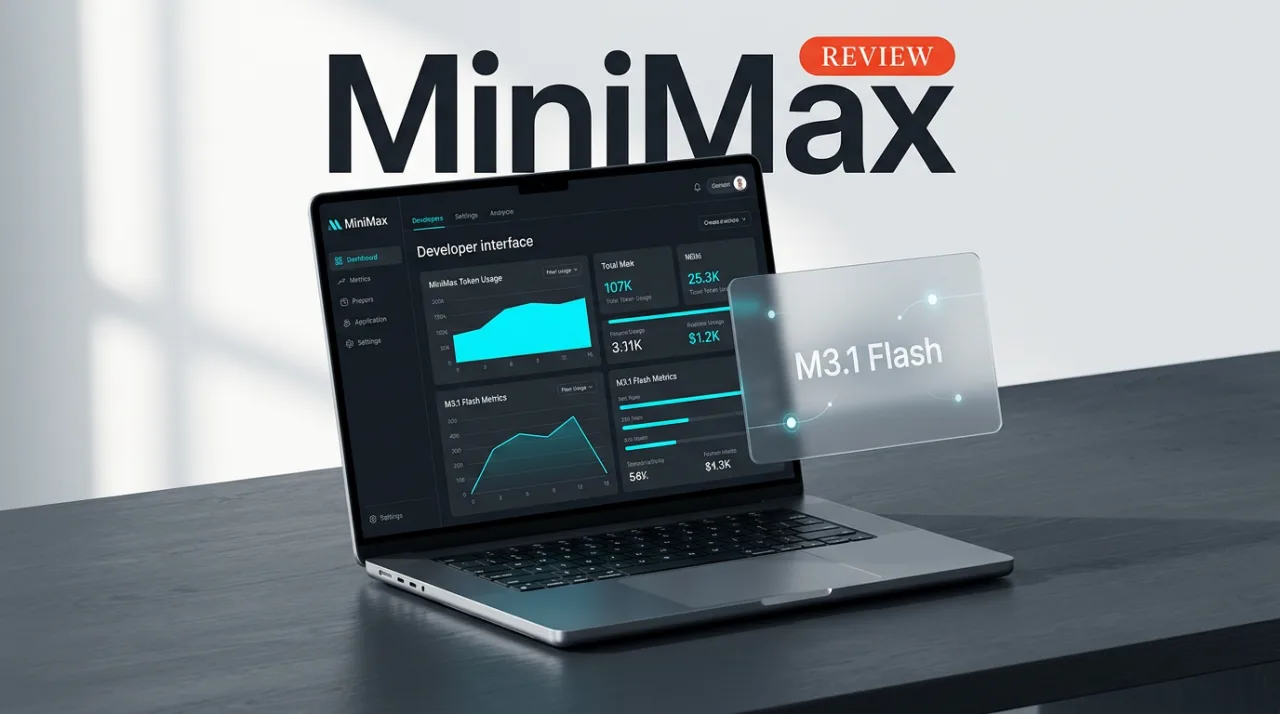
MiniMax M3.1 Flash is a 428-billion-parameter Mixture-of-Experts model released by Chinese AI lab MiniMax on October 19, 2026. It processes text, image, and video inputs while generating text output, with a maximum context window of 1 million tokens. The model targets agentic workflows, coding tasks, and computer-use scenarios.
MiniMax M3.1 Flash Model Capabilities and Architecture
The architecture activates roughly 23 billion parameters per token and incorporates MiniMax Sparse Attention across all layers. Quantization-aware training and DSpark speculative decoding support faster inference, with reported speeds exceeding 200 tokens per second. Open weights became available on Hugging Face on October 23, 2026, under a license that permits non-commercial use freely and requires authorization for commercial entities exceeding $20 million in annual revenue.
Core strengths include support for charts, images, and video alongside text. Vendor benchmarks list 62.8 on Automation-Bench v1.0.6, 76.2 on BankerToolBench, 73.7 percent on DeepSWE v1.1 coding tasks, and 61.7 on OSWorld V2 computer-use evaluations. An Intelligence Index score between 42 and 43 reflects improvement over the prior M3 model, while AA-Omniscience factual accuracy reaches 56 percent.
- Positioned for long agent runs with up to 524K output tokens
- Reasoning effort levels adjustable from low to maximum
- Compatible with SGLang and vLLM frameworks
- Download size approximately 252 GB in MXFP8 or NVFP4 formats
MiniMax API Pricing, Access, and Performance Comparisons
Official API access uses OpenAI- and Anthropic-compatible endpoints with the model identifier MiniMax-M3.1-Flash. Pricing remains flat across the full 1M context window at $0.15 per million input tokens, $0.60 per million output tokens, and $0.015 per million cached input tokens. These rates represent roughly half the cost of the predecessor M3 model, with claimed 70 percent lower overall usage for agentic workloads.
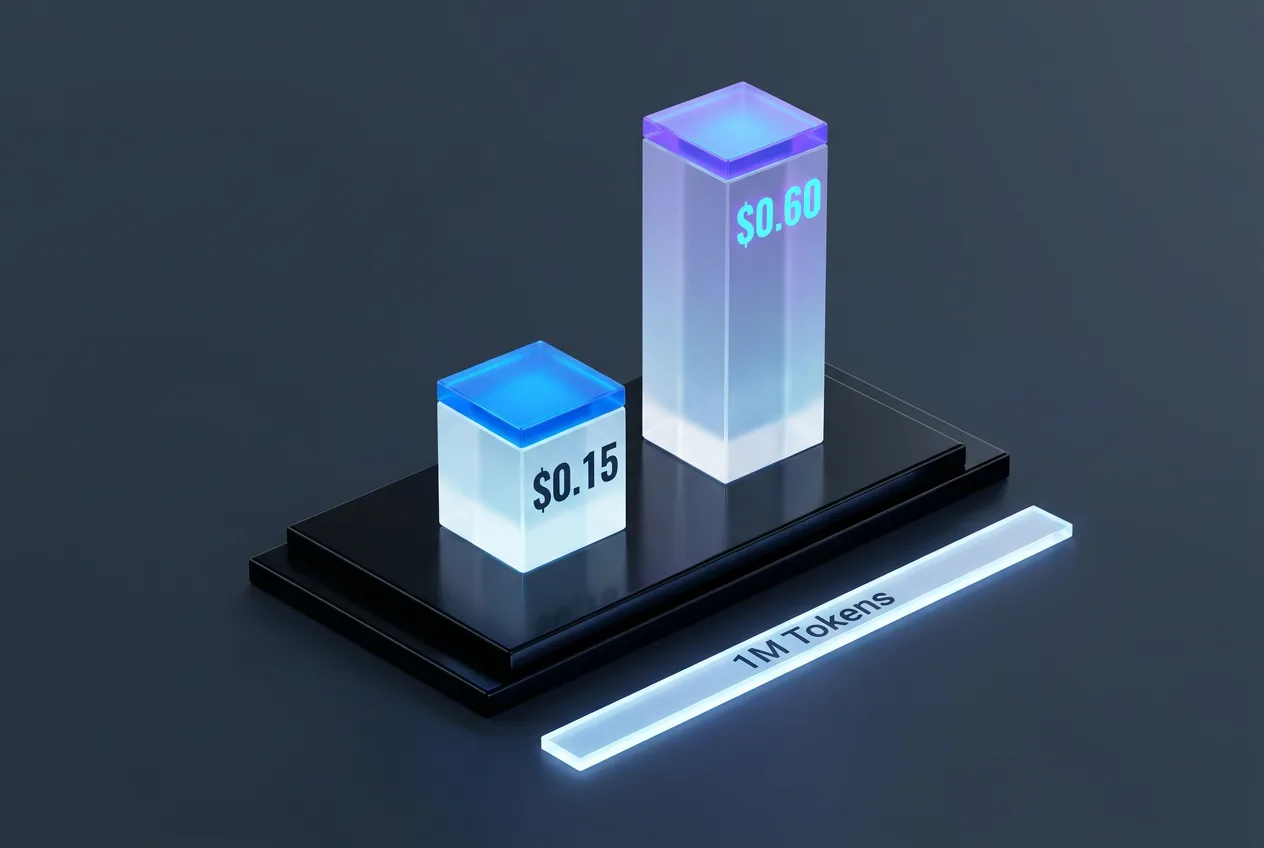
Third-party hosts including Together AI, OpenRouter, Novita, and Nebius offer the model at similar or slightly adjusted rates. No public details exist on custom enterprise volume discounts or dedicated SLAs beyond standard pay-as-you-go and M Plan subscription tiers. The model also appears in the MiniMax Code desktop application.
| Model | Input per 1M tokens | Output per 1M tokens | Context window |
|---|---|---|---|
| MiniMax M3.1 Flash | $0.15 | $0.60 | 1M |
| DeepSeek V4.1 Flash | $0.14 | $0.55 | 128K |
| Claude 3.5 Sonnet | $3.00 | $15.00 | 200K |
Independent evaluations note a 93 percent hallucination rate, with the model attempting nearly every question presented. It trails or matches DeepSeek V4.1 Flash-1017 on several coding benchmarks, while cost per task averages $0.22, described as 57 percent lower than the prior M3 release. A higher-capability Pro variant remains planned for later release.
Frequently asked questions
What is the context window size of MiniMax M3.1 Flash?
The model supports up to 1 million input tokens and a maximum output length often listed at 524K tokens, with no additional long-context surcharges on the official API.
How much does MiniMax M3.1 Flash cost via the official API?
Pricing stands at $0.15 per million input tokens, $0.60 per million output tokens, and $0.015 per million cached input tokens, applied uniformly across the full context length.
Are the MiniMax M3.1 Flash weights available for download?
Open weights were published on Hugging Face on October 23, 2026, under a license that allows free non-commercial use while requiring prior authorization for commercial entities above $20 million in annual revenue.
What input types does the M3.1 Flash model accept?
It processes text, image, and video inputs and returns text output, with native multimodal support for charts and video frames in addition to standard text prompts.
Comments 4