MiniMax M3.1 Flash review Shows 1M Token Context for Agent Workflows
Review summary
MiniMax M3.1 Flash delivers a 1M token context window and MoE reasoning at $0.15 input per million tokens. This review examines its API features, benchmarks, and limits.

MiniMax M3.1 Flash entered the market on October 19, 2026, as a multimodal MoE model from the Chinese lab MiniMax. It targets agentic workflows, coding, and computer-use tasks with a flat 1,000,000-token context window and no long-context surcharges. The model supports text, image, and video inputs while outputting text, and it includes native tool calling and prompt caching.
What Is MiniMax M3.1 Flash and Its Main Features?
The model carries 428 billion total parameters with roughly 23 billion active parameters per token. Inference speeds reach a peak above 200 tokens per second and a median near 170 tokens per second, roughly three times faster than the prior M3 release. Reasoning runs continuously and can be tuned through the reasoning_effort parameter at low, medium, high, xhigh, or max levels, with reasoning tokens counted toward output billing. Benchmarks reported by MiniMax place it at 62.2–62.8 on Automation-Bench, 76.2 on BankerToolBench, 61.7 on OSWorld V2, and 73.7 on DeepSWE v1.1. Max output length commonly sits between 128,000 and 524,288 tokens depending on the host platform.
Tool calling and prompt caching reduce costs on repeated agent steps. The model accepts video frames directly, which supports longer-horizon automation tasks. Third-party indices list its intelligence score near 42–43 while noting variable hallucination rates on complex sequences. Weights remain closed as of October 22, 2026, with a planned release the following day.
MiniMax API Pricing and Platform Details
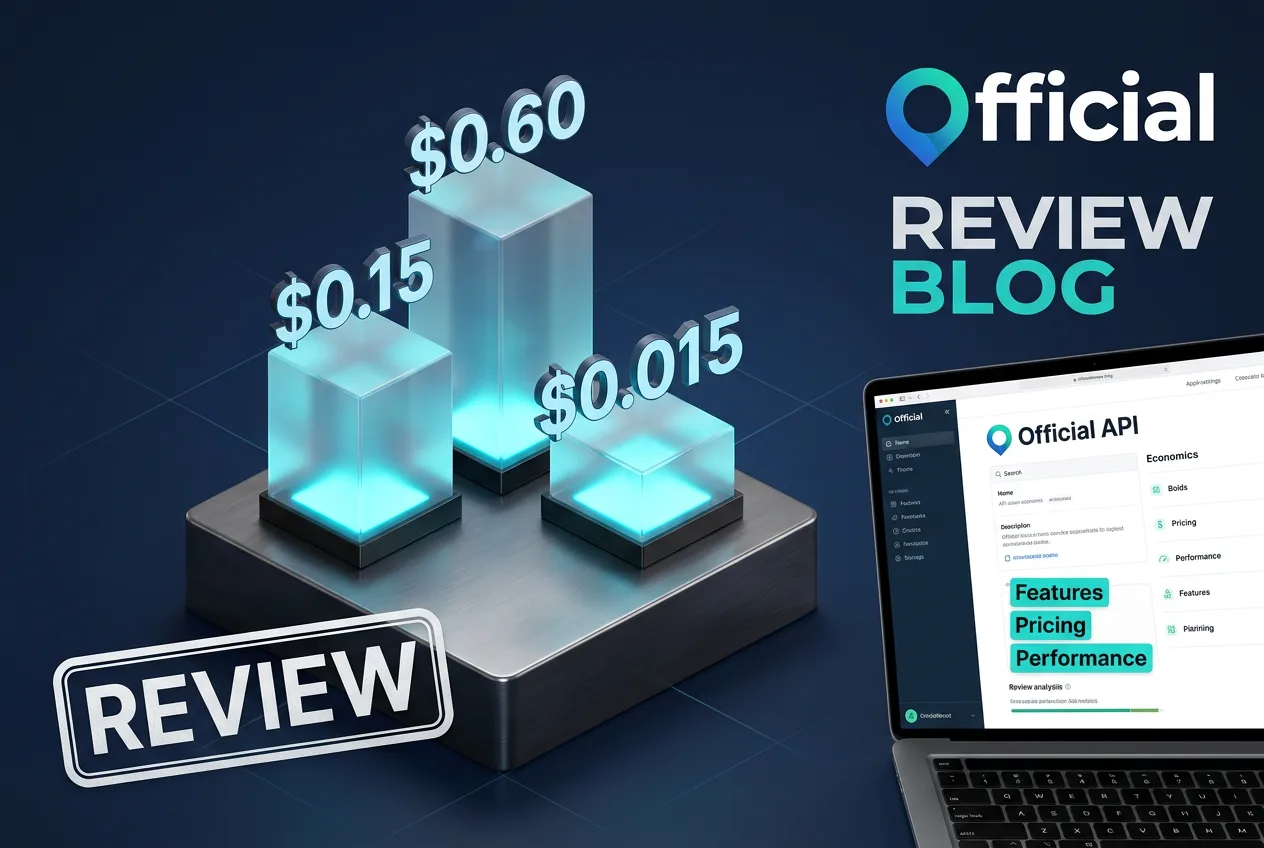
MiniMax lists flat rates of $0.15 per million input tokens, $0.60 per million output tokens, and $0.015 per million cached input tokens. These figures represent roughly half the cost of the earlier M3 model for equivalent context lengths. Some platforms require prepaid credit, and agentic workloads reportedly run about 70 percent cheaper than on the predecessor. Access occurs through platform.minimax.io, the M Plan subscription tier, the MiniMax Code desktop application, and third-party routers such as OpenRouter paid plans.
Registration uses standard API keys with documentation available at platform.minimax.io/docs. The service exposes the model ID minimax-m3.1-flash or MiniMax-M3.1-Flash. No public uptime statistics or independent latency tables have appeared yet. Earlier preview builds processed more than 200 trillion tokens on OpenRouter before the October launch.
Pros Cons Comparisons and Limitations of MiniMax M3.1 Flash
Strengths include the full 1M context at uniform pricing, native multimodal support, and competitive agent benchmarks at low per-token cost. Weaknesses center on the absence of open weights, limited independent verification of speed claims, and mixed results on long-horizon coding tasks. Public user feedback remains sparse because the model launched only three days ago; early reports on forums mention solid tool-use reliability but occasional reasoning loops at the max effort setting.
Competitor comparison:
| Model | Context Window | Input Price per 1M | Output Price per 1M | Multimodal |
|---|---|---|---|---|
| MiniMax M3.1 Flash | 1,000,000 | $0.15 | $0.60 | Text + image + video |
| Claude 3.5 Sonnet | 200,000 | $3.00 | $15.00 | Text + image |
| GPT-4o | 128,000 | $2.50 | $10.00 | Text + image + audio |
Limitations include the pending weight release, unknown license terms, and the fact that harder benchmarks such as Agents’ Last Exam sit at only 29.6. No formal security audit or data-residency policy details have been published by MiniMax. The model retires earlier M2.5 and M2.7 variants, directing traffic to this release.
Frequently asked questions
What context window does MiniMax M3.1 Flash support?
The model provides a flat 1,000,000-token context window. Output length varies by provider between 128K and 524K tokens. No additional fees apply for longer contexts.
How much does the MiniMax M3.1 Flash API cost?
MiniMax charges $0.15 per million input tokens, $0.60 per million output tokens, and $0.015 per million cached tokens. These rates apply uniformly across the full context window.
Does MiniMax M3.1 Flash support agent tool calling?
Yes. The model includes native function calling and prompt caching. It reports strong scores on Automation-Bench and OSWorld V2 benchmarks released with the October 2026 launch.
When will MiniMax release model weights?
MiniMax stated an expected release date of October 23, 2026. Earlier M3 weights are already public, but the M3.1 Flash license remains to be confirmed.
Comments 2