MiniMax M3.1 Flash API Review: Context, Pricing, and Agent Capabilities
Review summary
MiniMax released the M3.1 Flash model on October 19, 2026. It offers a 1-million-token context window and agent-focused features at $0.15 per million input tokens.
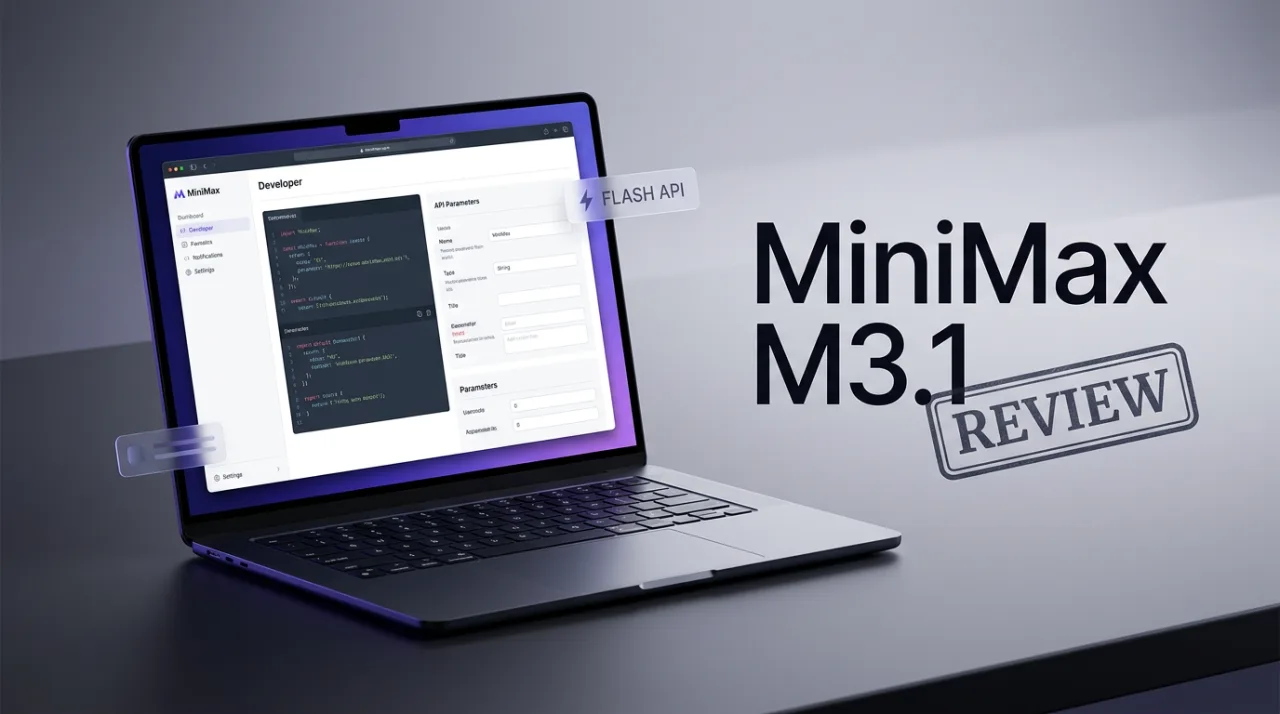
MiniMax launched the M3.1 Flash model on October 19, 2026, through its API at platform.minimax.io. The release targets agentic workflows, long-context coding, and multimodal tasks with a 1-million-token context window. Early internal testing under the name Space Bunny processed over 200 trillion tokens before public rollout.
The model accepts text, image, and video inputs. It supports OpenAI and Anthropic SDKs through compatible endpoints. Model weights are scheduled for release on October 23, 2026.
MiniMax M3.1 Flash API Features and Agent Capabilities
Always-on adaptive thinking runs by default and cannot be disabled. Users adjust depth with the effort parameter set to low, medium, high, xhigh, or max. Reasoning output appears in a separate reasoning_content field for OpenAI compatibility or in thinking blocks for Anthropic format.
The model handles tool calling, function use, and interleaved thinking for multi-step sessions. It includes a server-side web_search tool billed at $0.01 per call. Official benchmarks include DeepSWE v1.1 at 73.7 percent, Automation-Bench at 62–62.8 percent, BankerToolBench at 76.2, OSWorld V2 at 61.7, Agents’ Last Exam at 29.6, and CyberGym at 82 percent.
Third-party tests note gains on the Artificial Analysis Intelligence Index, rising from 29 on the prior M3 version to 42. Some evaluations flag elevated hallucination rates on certain tasks despite the speed improvements.
MiniMax API Pricing, Access, and Performance
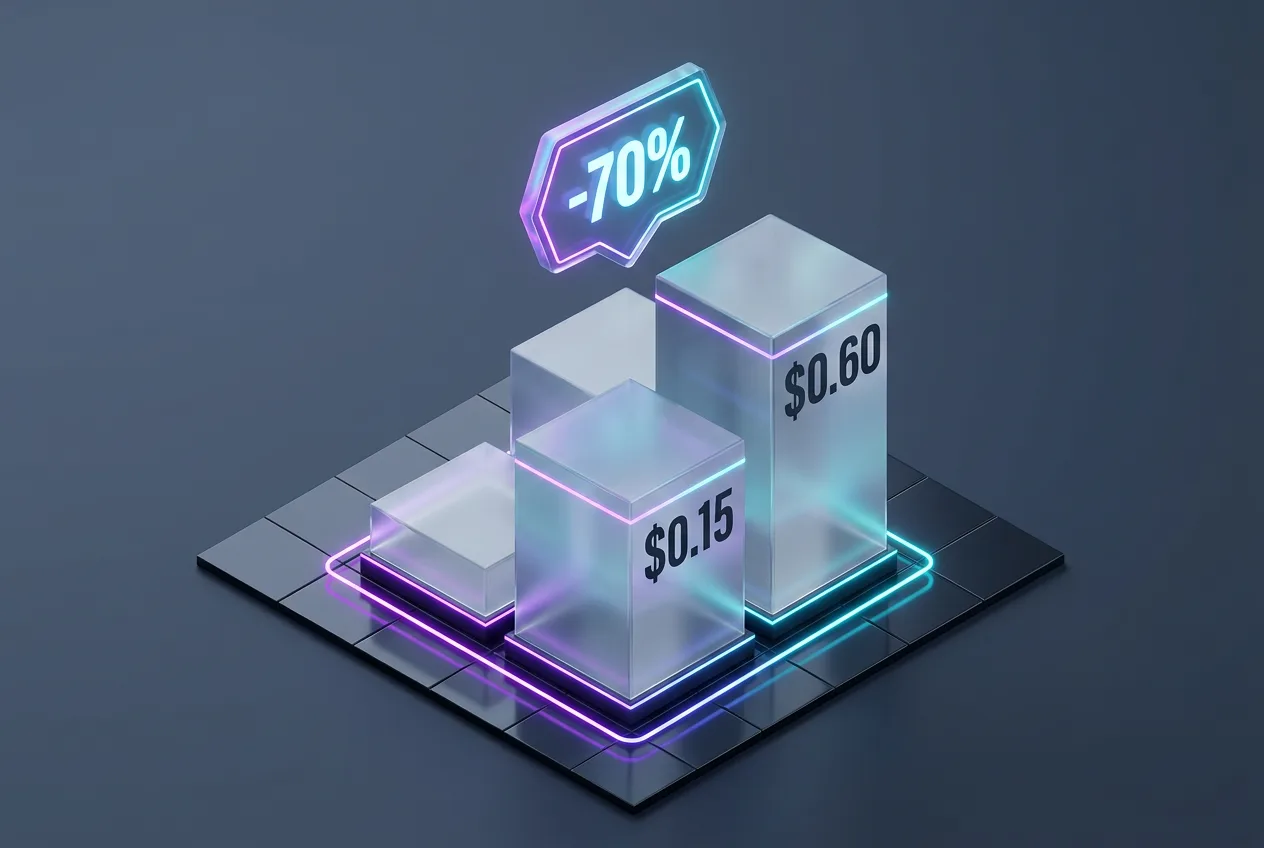
Pricing on the official MiniMax API uses a flat rate per million tokens: $0.15 for input, $0.60 for output, and $0.015 for cached prompt reads. The structure delivers claimed task cost reductions of around 70 percent compared with the previous generation. M Plan subscriptions and pay-as-you-go options are both available.
Access requires an API key from platform.minimax.io. Rate limits align with the earlier M3 model, including examples of 200 requests per minute and 10 million tokens per minute. Third-party gateways sometimes apply discounts near 25 percent off listed rates.
Inference speed reaches everyday output above 200 tokens per second at peak and roughly 170 tokens per second at the 50th percentile. Sparsity optimizations drive the reported threefold improvement over the prior model.
| Model | Input per 1M tokens | Output per 1M tokens | Context window | Agent tool support |
|---|---|---|---|---|
| MiniMax M3.1 Flash | $0.15 | $0.60 | 1,000,000 | Yes, web_search included |
| DeepSeek equivalent | $0.27 | $1.10 | 128,000 | Limited native tools |
| Claude 3.5 Sonnet | $3.00 | $15.00 | 200,000 | Computer use beta |
MiniMax M3.1 Flash Limitations and Comparisons
Rate limits remain shared with the prior M3 release and may constrain high-volume agent runs. Hallucination rates reported in third-party tests represent a noted drawback on complex reasoning chains. Security and compliance documentation is not detailed in current public materials beyond standard API key access.
Compared with DeepSeek and Claude 3.5 Sonnet, the MiniMax model provides a larger context window and lower per-token pricing. It adds native server-side search at a fixed low cost. Competitors often charge higher rates for similar output volumes and maintain smaller context limits.
User feedback from early reports highlights strong results on automation and cybersecurity benchmarks. Common complaints center on occasional confident but incorrect outputs during extended sessions. No widespread service outages or data incidents have been documented since the October 19 launch.
Frequently asked questions
What is the context window size of MiniMax M3.1 Flash?
The model supports a 1,000,000-token context window. This capacity covers long documents, extended coding sessions, and multi-turn agent interactions without truncation.
How much does MiniMax M3.1 Flash API cost per million tokens?
Official pricing lists input at $0.15, output at $0.60, and cached reads at $0.015 per million tokens. These rates apply on a pay-as-you-go basis or through M Plan subscriptions.
Does MiniMax M3.1 Flash support tool calling for agents?
Yes. The model includes function calling, structured outputs, and a built-in web_search tool. It works with both OpenAI and Anthropic SDKs through dedicated endpoints.
What benchmarks does MiniMax M3.1 Flash lead on?
Vendor data shows 73.7 percent on DeepSWE v1.1, 76.2 on BankerToolBench, and 82 percent on CyberGym. Independent tests place it above prior MiniMax versions on agentic tasks.
Comments 3