Opsin Review: Agent Reach Analysis and Access Controls
Review summary
Opsin provides discovery, risk mapping, and access governance for AI agents across major platforms. This review examines its core capabilities using verified deployment data.
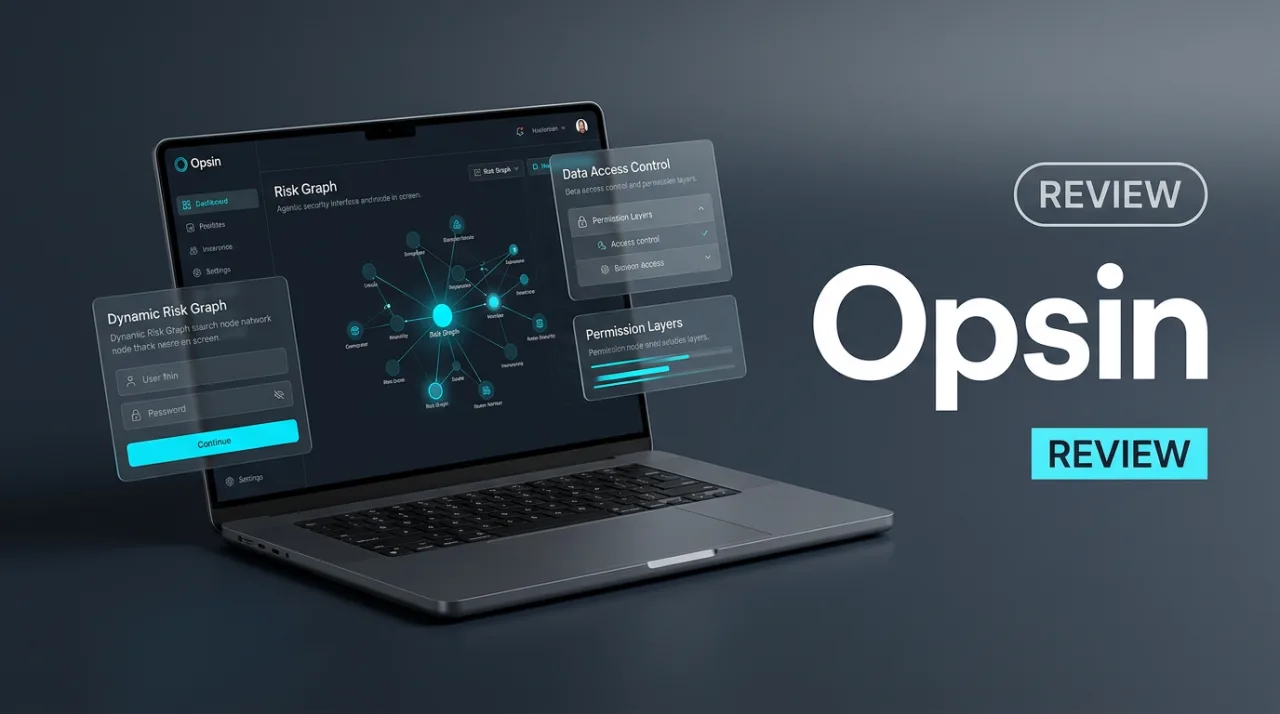
Opsin is an AI-native governance, risk, and compliance platform built specifically for enterprise AI agents. Launched in 2024 and headquartered in San Jose, California, it functions as a guardian agent system rather than a general-purpose GRC tool. Its primary focus lies in mapping agent permissions, monitoring behavior, and enforcing controls on platforms including Microsoft 365 Copilot, ChatGPT Enterprise, Claude Enterprise, and Gemini.
Opsin Review: Platform Overview and Development Background
Founded by James Pham, Oz Wasserman, and Jeremy Mailen, Opsin began as a solution for data oversharing in copilots before expanding to full agentic security. The company raised $21 million in October 2026, bringing total funding to approximately $28 million. It currently serves nearly 20 enterprise customers in healthcare, financial services, and manufacturing, including Culligan, Barry-Wehmiller, Wellstar Health System, and UiPath.
The platform performs continuous, agentless discovery through APIs. It builds an inventory of agents and updates it whenever new agents are created, modified, or shared. Initial risk assessments typically complete within 24 hours of deployment. Opsin treats agents as non-human identities and integrates with tools such as Torq for security operations workflows. It received recognition in the 2026 Gartner Market Guide for Guardian Agents and maintains a partnership with Anthropic for Claude Compliance API support.
Agent Reach Analysis and Access Controls
Opsin constructs a Risk Graph that connects agent intent, owner identity, permissions, data access, tool calls, and runtime activity. This mapping reveals excessive or unrestricted access; one internal analysis found 93 percent of misaligned tools had full unrestricted permissions. The system compares actual reach against intended purpose and flags agents lacking clear ownership, with reports citing 60 to 119 such agents per environment on average.

Access governance includes pre-approval checks at the draft stage and ongoing verification after changes. Behavioral baselining identifies deviations from established patterns, after which risks receive priority scores based on sensitivity and potential impact. Response options include quarantine, blocking specific actions, owner notifications with remediation guidance, or full access revocation. Reported deployment averages include 67 percent faster investigations, 98 percent auto-assignment of issues, 70 percent risk reduction within six weeks, and 81 percent average reduction in sensitive data exposure. Only one in 200 agents required human approval before acting, according to platform data.
Ease of use centers on API-driven integration that requires no agents installed on endpoints. Registration and initial setup rely on existing enterprise credentials for supported platforms. No public pricing details appear on the company site or announcements, so exact costs and any usage-based fees remain undisclosed. Security features emphasize context-specific controls that traditional IAM and data loss prevention tools do not provide for autonomous agents.
Metrics, Limitations, and Competitor Context
Self-reported metrics from Opsin Labs and customer deployments show 253 percent month-over-month growth in AI adoption after implementation. These figures come directly from platform announcements and have not been independently audited in public sources. External user reviews and complaints remain limited in available public channels, with most commentary tied to the October 2026 funding announcement rather than long-term operational experience.
Direct competitor comparisons are constrained by the specialized nature of guardian agent platforms. Unlike broader security tools focused on endpoints or identity, Opsin supplies agent-specific reach analysis that legacy systems lack. Potential limitations include dependence on API availability from supported LLM providers and the need for continued expansion to cover inter-agent interactions as autonomy increases. Platform updates planned for greater tool classification depth are noted in recent announcements but not yet quantified in customer environments.
Frequently asked questions
What platforms does Opsin integrate with for agent discovery?
Opsin supports Microsoft 365 Copilot, ChatGPT Enterprise, Claude Enterprise, and Gemini through API connections. Discovery occurs without installing agents on endpoints.
How quickly does Opsin complete initial risk assessments?
The platform delivers an initial inventory and risk assessment within approximately 24 hours after connection to supported environments.
Are Opsin pricing details publicly available?
No detailed pricing tiers or commission structures have been released in company announcements or on the official site as of October 2026.
What metrics have been reported from Opsin deployments?
Customer averages include 70 percent risk reduction in six weeks and 81 percent reduction in sensitive data exposure, according to platform data.
Does Opsin provide direct comparisons with traditional IAM tools?
The platform positions itself as filling gaps left by IAM and data security tools through agent-specific context mapping rather than broad identity management.
Comments 8