PayQuicker Review: API v2 Payout Capabilities and Integration Details
Review summary
PayQuicker operates as a global payouts platform with API v2 introduced in October 2026, adding real-time webhooks and batch processing for up to 5,000 payments per job across 210 countries.
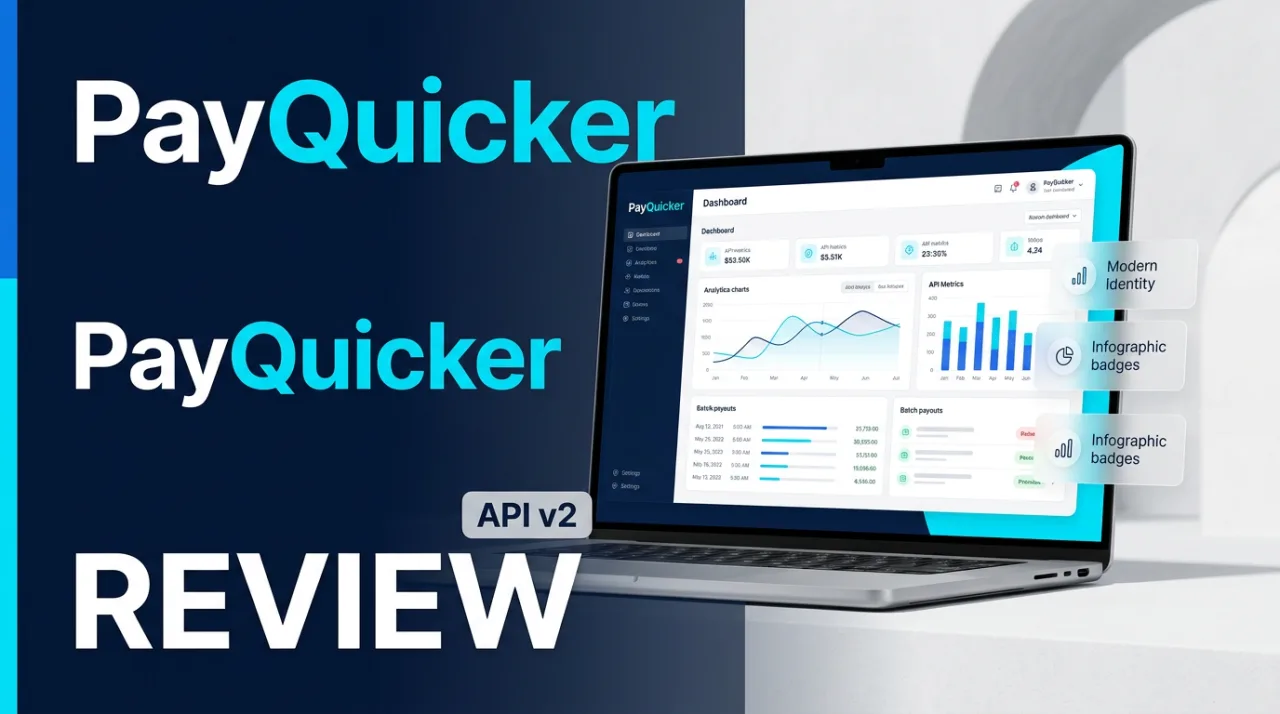
PayQuicker review of the platform highlights its focus on mass payouts to contractors, affiliates, gig workers, and other recipients in 210 countries and territories using 80 currencies. The company, founded around 2007, processes roughly one billion dollars in annual volume through a mix of bank transfers, debit cards, and instant options. API v2 became available on October 14, 2026, introducing AI-driven automation while leaving existing v1 integrations untouched.
PayQuicker Review of API v2 Endpoints and Core Payout Features
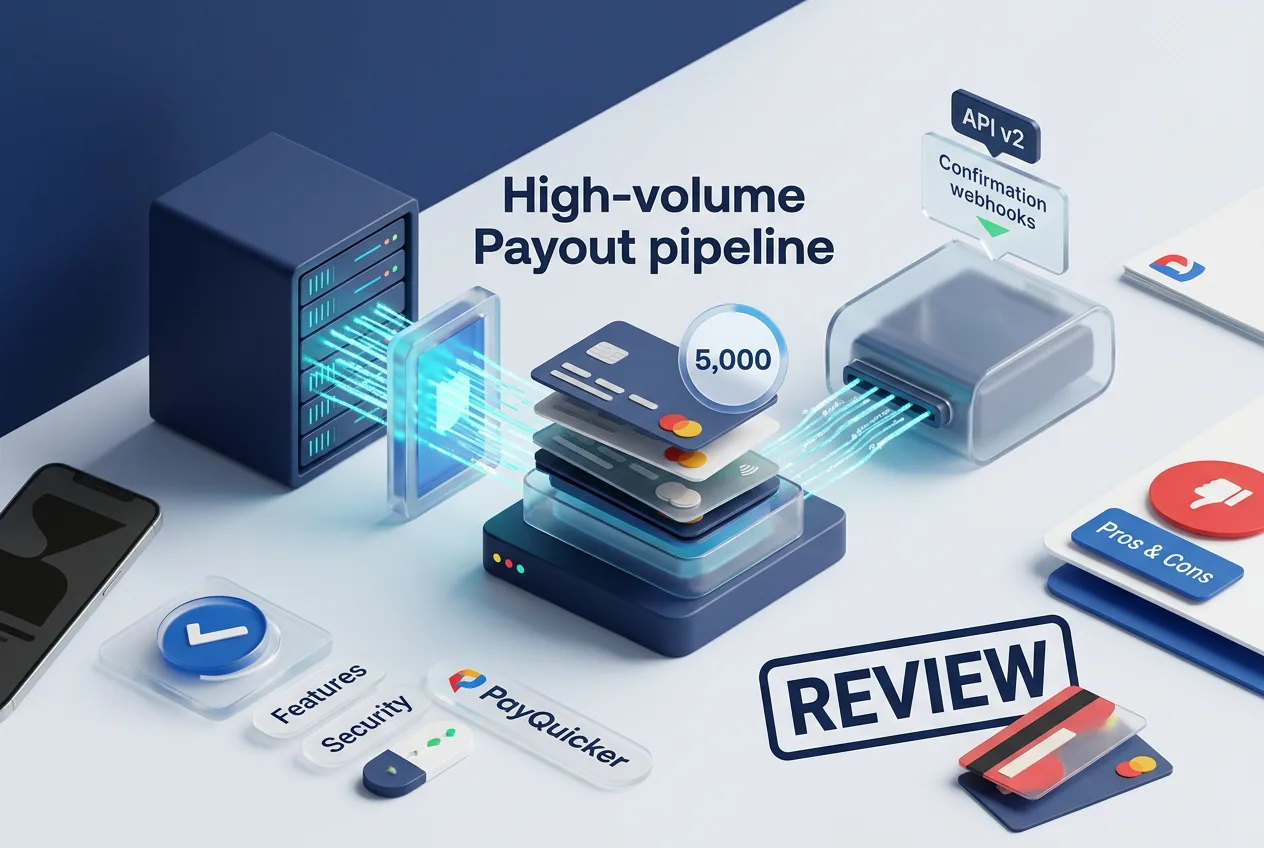
The new RESTful API adds real-time signed webhooks that notify users of payee registrations, payment status changes, account receipts, and batch job progress. High-volume batch jobs support up to 5,000 payments or invitations per request and can be scheduled up to 30 days ahead, with detailed reporting on any failed rows. Payment retractions allow recovery of remaining balances from erroneous transactions, and enhanced funds visibility endpoints provide direct access to funding balances and transaction activity.
Core functions remain available through either the single RESTful API or batch file uploads. These include sending invitations and payments, processing spendback debits, and retrieving balances, reports, and transactions. Intelligent multi-rail routing selects the fastest or lowest-cost method automatically. Payee-owned insured bank accounts grant instant access to funds, and clients can deploy white-label portals plus mobile apps for iOS and Android. Payout methods cover branded debit cards, ATM cash access, same-day ACH, Apple Pay, Google Pay, and PayQuicker Flex for instant stablecoin-like transfers in more than 60 currencies. Frequency reaches hourly or real-time where supported rails permit.
Compliance tools include automated KYC and AML checks plus tax services for W-9 and TIN collection and issuance of 1099, 1042-S, and T4A forms. Security certifications cover SOC 1, SOC 2, PCI DSS, GDPR, CPRA, CCPA, and the EU-U.S. Data Privacy Framework. Data protection uses TLS and AES encryption along with role-based access controls and MFA.
Integration Experience, Pricing, and Platform Limitations
Registration and sandbox access require contact with an account representative. Documentation sits at docs.payquicker.io. The interface supports both API calls and file uploads, reducing the need for custom development for high-volume users. Technical requirements remain standard for RESTful services, with no public details released on exact rate limits or latency benchmarks.
Pricing operates on a custom quote basis with no published starting rates or public plans. Card-order fees may apply according to individual contracts. Payee-side fees occasionally appear in third-party contexts but lack platform-wide confirmation. No hidden costs beyond contract terms have been documented in official materials.
Independent user reviews of API v2 remain limited because the release occurred only weeks ago. Earlier platform feedback mentions reliable payout delivery and broad country coverage, while some complaints center on the absence of transparent pricing and occasional delays during peak volume periods. No widespread security incidents appear in public records.
Compared with similar services, PayQuicker offers stronger batch size limits and retraction capabilities than many competitors focused on single payments. It trails some rivals in publicly available pricing transparency. Its 300-plus client base and 2026 DSA Partnership Award provide evidence of established use in direct selling and marketplace verticals, though exact feature parity with alternatives depends on specific contract negotiations.
Strengths, Weaknesses, and Long-Term Outlook
Strengths include the recent addition of signed webhooks, large batch handling, and payment retractions, all of which reduce manual intervention for high-volume senders. Global reach, insured payee accounts, and compliance automation further support enterprise needs. Weaknesses center on quote-only pricing that hinders quick cost comparisons and the short time since API v2 launch, which means long-term stability data is still accumulating.
Potential issues include dependence on contract terms for fees and the optional nature of the v2 upgrade, which may slow adoption among existing v1 users. Continued expansions in LATAM and APAC rails plus tax integrations remain on the 2026 roadmap without fixed delivery dates. The platform continues to add client-requested features, yet organizations evaluating it should request detailed quotes and sandbox testing before committing to production use.
Frequently asked questions
When was PayQuicker API v2 released?
API v2 launched on October 14, 2026, as a next-generation RESTful interface with new webhook and batch features. Existing v1 integrations continue without disruption.
What batch sizes does PayQuicker support?
Each batch job handles up to 5,000 payments or invitations and can be scheduled up to 30 days in advance, with individual reporting on failed rows.
Is PayQuicker pricing public?
Pricing remains available only through custom quotes. No standard plans or starting fees appear on the official site, though card-order charges may apply per contract.
Which countries does PayQuicker cover?
The platform supports payouts in 210 countries and territories using 80 currencies, including bank transfers, debit cards, and instant options where rails allow.
Does PayQuicker offer tax services?
Yes, automated tax tools collect W-9 and TIN data and issue 1099, 1042-S, and T4A forms as part of the core compliance offering.
Comments 2