QuickCloud App Hosting Review: Git Deployments and Managed PaaS from QuickHost
Review summary
QuickCloud App Hosting provides managed deployments for web apps and APIs via Git or containers, with automatic HTTPS and integration into QuickHost's UK infrastructure.
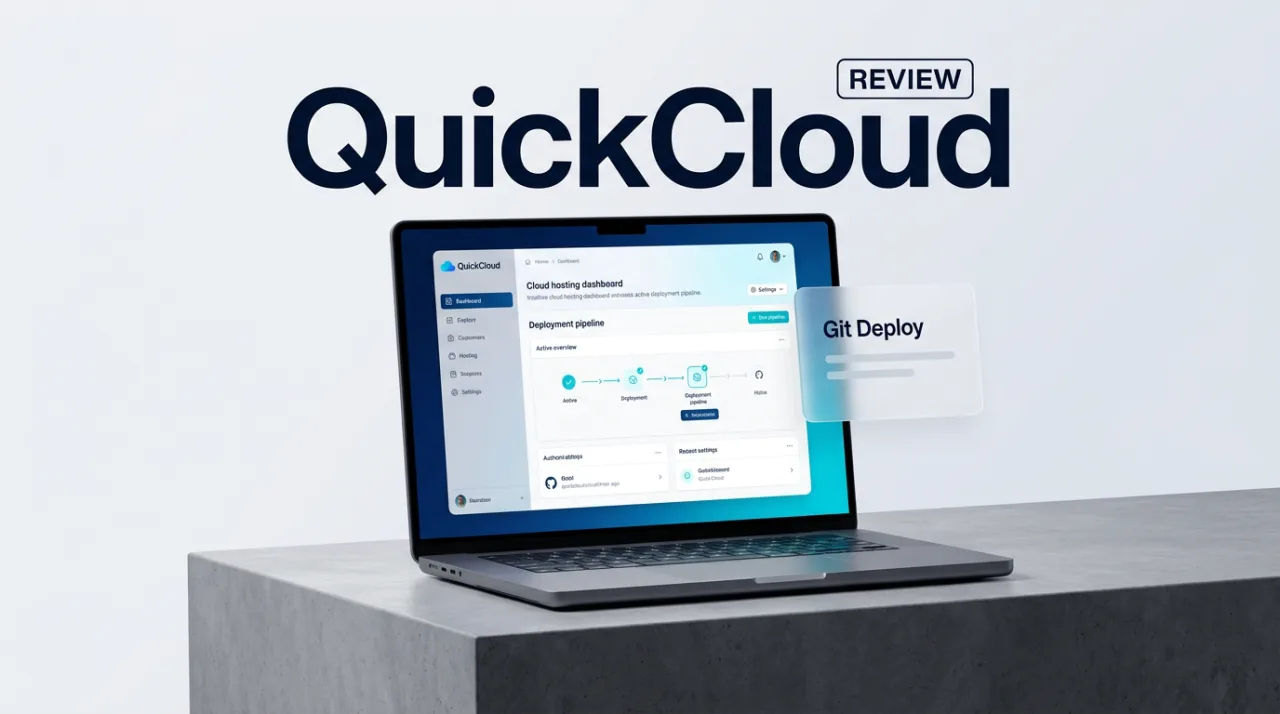
QuickCloud App Hosting is a managed PaaS from UK-based QuickHost that lets developers deploy websites, web apps, APIs, and background workers directly from Git repositories or Docker containers. Launched as a rebranded and expanded service on October 15, 2026, it targets teams that want simplified infrastructure without managing servers or operating systems. The platform supports Node.js, Python, PHP, Go, Ruby, and .NET runtimes, along with frameworks such as Laravel, Django, Express, Rails, and Spring.
Deployment Options, Integrations, and Core Features
Users push code to a connected Git repository and the service builds and deploys automatically. Container deployments accept Dockerfiles for custom runtimes or build steps. Every deployment receives automatic HTTPS, custom domain support, and certificate management without manual configuration. The platform records logs, metrics, environment variables, and full deployment history with one-click rollback.
Persistent storage volumes start at £0.09 per GB per month and retain data across restarts and redeploys. QuickCloud App Hosting connects directly to QuickCloud Managed Databases, which include PostgreSQL 17, MariaDB 11.8, and Valkey/Redis-compatible instances with optional high-availability clusters. The service sits inside the broader QuickCloud Workspace that also offers virtual machines, load balancers, firewalls, DNS, and SMTP relay.
Management is available through a web panel, REST API, the qc command-line tool, or AI assistants such as ChatGPT with MCP integration. Scaling adjusts container sizes on demand, and the service runs in QuickHost’s own UK datacenter that holds ISO 9001 and ISO 27001 certifications.
Pricing Structure, Security Controls, and Platform Limits
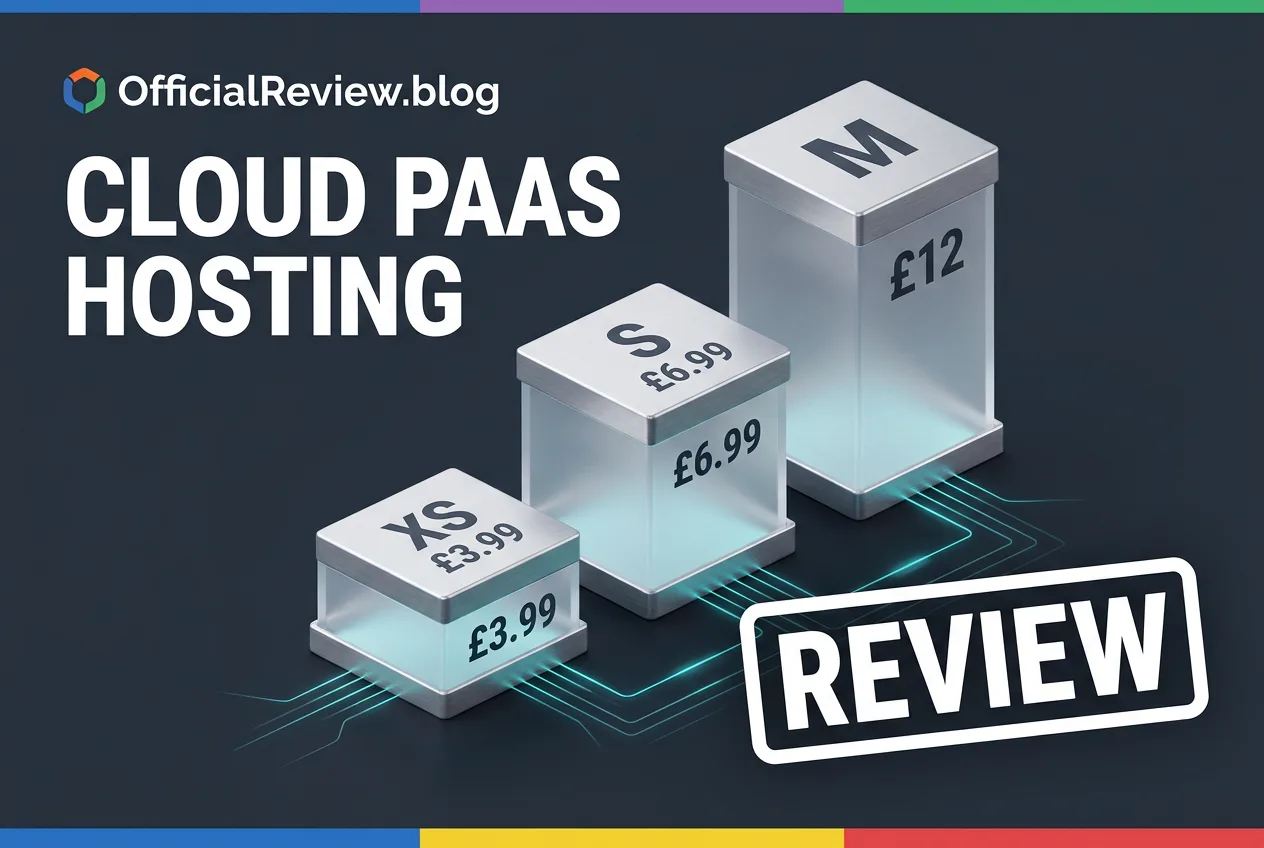
Billing is hourly with monthly caps and no long-term contracts. A free tier exists for testing. Paid plans include XS at a £3.99 monthly maximum (0.25 vCPU, 256 MB), S at £6.99 (0.5 vCPU, 512 MB), M at £12 (1 vCPU, 1 GB), L at £18.99 (2 vCPU, 2 GB), and XL at £34.99 (4 vCPU, 4 GB). Persistent volumes and managed databases are billed separately. The company has operated since 2012 and advertises a 99.99 percent uptime SLA on eligible high-availability services.
Security relies on the ISO-certified datacenter and standard PaaS isolation between customer containers. No root or operating-system access is provided, which prevents arbitrary software installs outside the supported build process. Database and storage charges appear as separate line items, so total spend depends on usage patterns beyond the base plan caps.
| Plan | Max Monthly Cost | vCPU | Memory |
|---|---|---|---|
| XS | £3.99 | 0.25 | 256 MB |
| S | £6.99 | 0.5 | 512 MB |
| M | £12 | 1 | 1 GB |
| L | £18.99 | 2 | 2 GB |
| XL | £34.99 | 4 | 4 GB |
Independent reviews of the post-rebrand QuickCloud App Hosting service remain limited. Users moving from the earlier Launchpad platform note improved persistence and database connectivity, yet some report that complex applications still require custom Dockerfiles. Complaints center on separate billing for storage and databases and on the absence of full virtual-machine control for specialized software stacks.
Competitor Comparison and Final Assessment
Compared with Render and DigitalOcean App Platform, QuickCloud App Hosting offers tighter integration with a single UK provider’s virtual machines and load balancers but lacks the broader global regions those platforms provide. Heroku remains more expensive at similar resource levels and offers less transparent storage pricing. QuickCloud’s hourly billing with caps gives more predictable costs than pure usage-based models, yet the service is newer and has fewer third-party case studies.
The main limitations include the need for Dockerfile customization on non-standard runtimes, separate charges for databases and volumes, and sparse public user feedback for the 2026 version. The platform delivers straightforward Git workflows, automatic HTTPS, and UK-based infrastructure with clear certifications, while requiring users to accept reduced operating-system control compared with raw virtual machines.
Frequently asked questions
What languages and frameworks does QuickCloud App Hosting support?
The platform supports Node.js, Python, PHP, Go, Ruby, and .NET. Popular frameworks such as Laravel, Django, Express, Rails, and Spring run if they fit inside a container; some require a custom Dockerfile.
How is QuickCloud App Hosting priced?
Plans range from a free tier to XL at a £34.99 monthly maximum. Each plan lists a capped monthly cost based on vCPU and memory allocation. Persistent volumes and managed databases add separate charges.
Where is QuickCloud App Hosting infrastructure located?
All services run in QuickHost’s own UK datacenter. The facility holds ISO 9001 and ISO 27001 certifications, and the company has operated since 2012.
Does QuickCloud App Hosting include managed databases?
Yes. It integrates with QuickCloud Managed Databases offering PostgreSQL 17, MariaDB 11.8, and Valkey/Redis-compatible instances. High-availability clusters are available as an option.
Comments 7