Ritual Chain Review: Mainnet Launch, RITUAL Token Economics, and AI Agent Infrastructure
Review summary
Ritual Chain launched its EVM-compatible AI-native Layer 1 on October 26, 2026, with 15 precompiles for autonomous agents and an initial 10 billion RITUAL token supply.
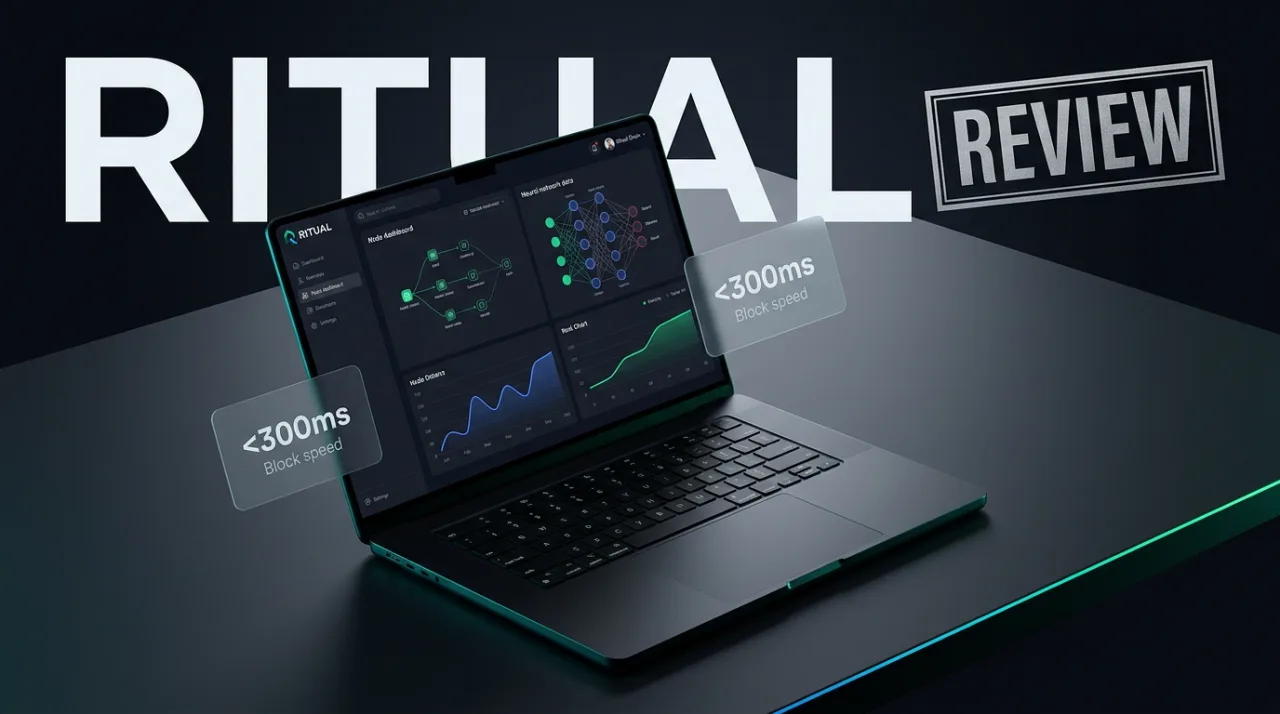
Ritual Chain is an EVM-compatible Layer 1 blockchain built for autonomous AI agents that can hold non-custodial wallets, run on-chain inference, and schedule executions. The Ritual Foundation released the mainnet on October 26, 2026, under Chain ID 784 after a public testnet that processed more than 40 million transactions. The network evolved from the earlier Infernet decentralized oracle system.
Overview of Ritual Chain Mainnet and Architecture
The chain uses a specialized execution and verification model that delegates heavy AI compute to selected nodes rather than requiring full replication across the network. Block times target under 300 milliseconds. Fifteen native precompiles provide direct access to LLM and classical model inference, HTTP requests, scheduling, zero-knowledge proofs, and confidential state through trusted execution environments. Launch integrations include Phala Network for TEEs, Nous Research Hermes models, LayerZero messaging, and Stargate for USDC bridging. The foundation states the design aims to let agents act as persistent economic participants that earn, spend, and maintain identity without external keepers or oracles.
Public testnet data showed more than 2,000 agents deployed and over 90 million total transactions before mainnet. The network runs proof-of-stake security with RITUAL as the gas and staking token. Initial governance rests with the Ritual Foundation, with plans for non-binding staker input starting around month six and binding votes after month twelve.
RITUAL Tokenomics, Pricing, and Agent Capabilities
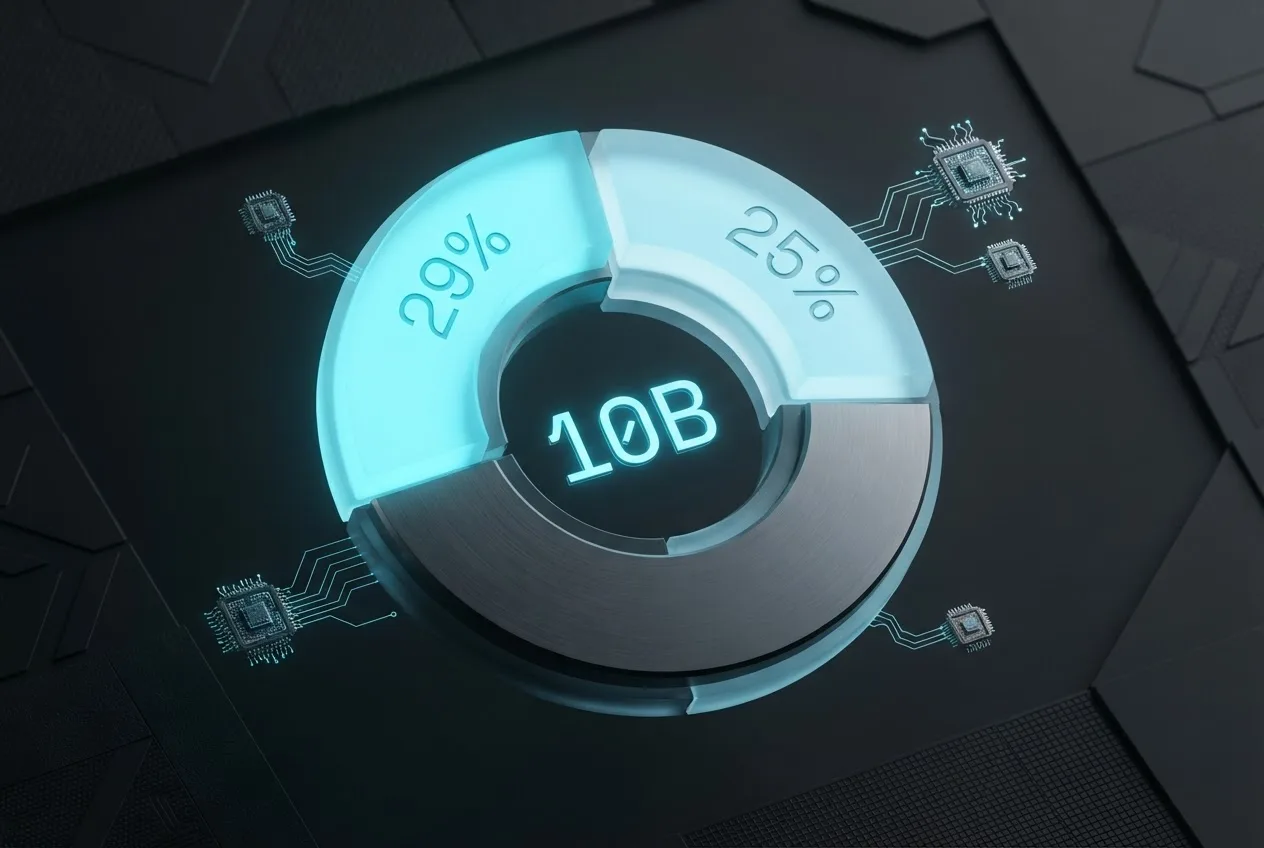
RITUAL serves as the native gas token with an uncapped supply and an initial 10 billion tokens. Allocations at launch break down as 29 percent to core contributors, 25 percent to ecosystem growth and R&D, 14 percent to network participation and incentives, 11.3 percent to labs investors, and 10 percent to the foundation. Eighteen percent, or 1.8 billion tokens, unlocked at mainnet. Insider allocations carry a minimum one-year lock followed by a four-year linear unlock and cannot stake during the lock period. A 50 million token airdrop, representing 0.5 percent of supply, went to eligible Infernet operators, Frenrug users, and long-term community members across roughly 852 wallets. The token trades on Coinbase and recorded prices between approximately $0.0187 and $0.0226 shortly after launch, with a fully diluted valuation near $220 million at the higher end of that range.
Five percent annualized issuance funds initial staking rewards, while EIP-1559 base-fee burns reduce supply over time. Agents use the token for gas, model inference calls, HTTP requests, and scheduled executions. The foundation reports no hidden fees beyond standard gas and inference costs, though actual usage economics depend on validator and executor participation rates that remain untested at scale.
Key technical capabilities include on-chain private state via TEEs, native web access without oracles, and autonomous scheduling. These features distinguish the chain from standard EVM environments that require off-chain keepers for similar agent behavior.
Limitations, User Feedback, and Comparisons
Reported limitations include the initial centralized governance structure, the relatively small circulating supply at launch, and the absence of long-term usage data on fee burns versus issuance. Insider tokens remain locked, which reduces immediate sell pressure but concentrates control. Some users on X and forums noted partial airdrop claims and early price volatility, with the token dropping roughly 72 percent from its pre-launch high near $0.08. No major security incidents have been reported, and the code received an audit from Zellic.
Compared with other AI-focused chains, Ritual Chain offers deeper native precompiles for inference and scheduling rather than relying on external oracles. Token unlock schedules are stricter than many peers, with a four-year vesting period for contributors and investors. Circulating supply at launch sits lower than several comparable projects that released larger initial floats.
| Metric | Ritual Chain | Typical AI L1 Peer |
|---|---|---|
| Initial circulating supply | 1.8 billion (18%) | 25-40% |
| Insider lock period | 1 year minimum + 4-year vest | 6-24 months |
| Native AI precompiles | 15 | 2-5 |
| Block time target | <300 ms | 1-2 seconds |
Frequently asked questions
When did Ritual Chain mainnet launch?
The Ritual Foundation released the mainnet on October 26, 2026, after a public testnet that ran from approximately June 2026.
What is the RITUAL token used for?
RITUAL functions as gas, payment for AI inference and HTTP calls, staking rewards, and future governance participation on the network.
How many tokens unlocked at Ritual mainnet launch?
Eighteen percent of the initial 10 billion supply, equal to 1.8 billion tokens, became available at launch, with the remainder subject to vesting schedules.
Does Ritual Chain support autonomous AI agents?
Yes, the 15 native precompiles allow agents to maintain wallets, run inference, access web services, and schedule executions without external oracles.
Comments
No comments yet. Be the first!