Spotex Review: Institutional Liquidity Venue, Caladan Partnership, Proof-of-Reserves, and Spot Trading Fees
Review summary
Spotex operates a retail spot exchange and an institutional FX ECN that added crypto services. Daily on-chain proof of reserves and a new Caladan liquidity partnership are central to its setup.
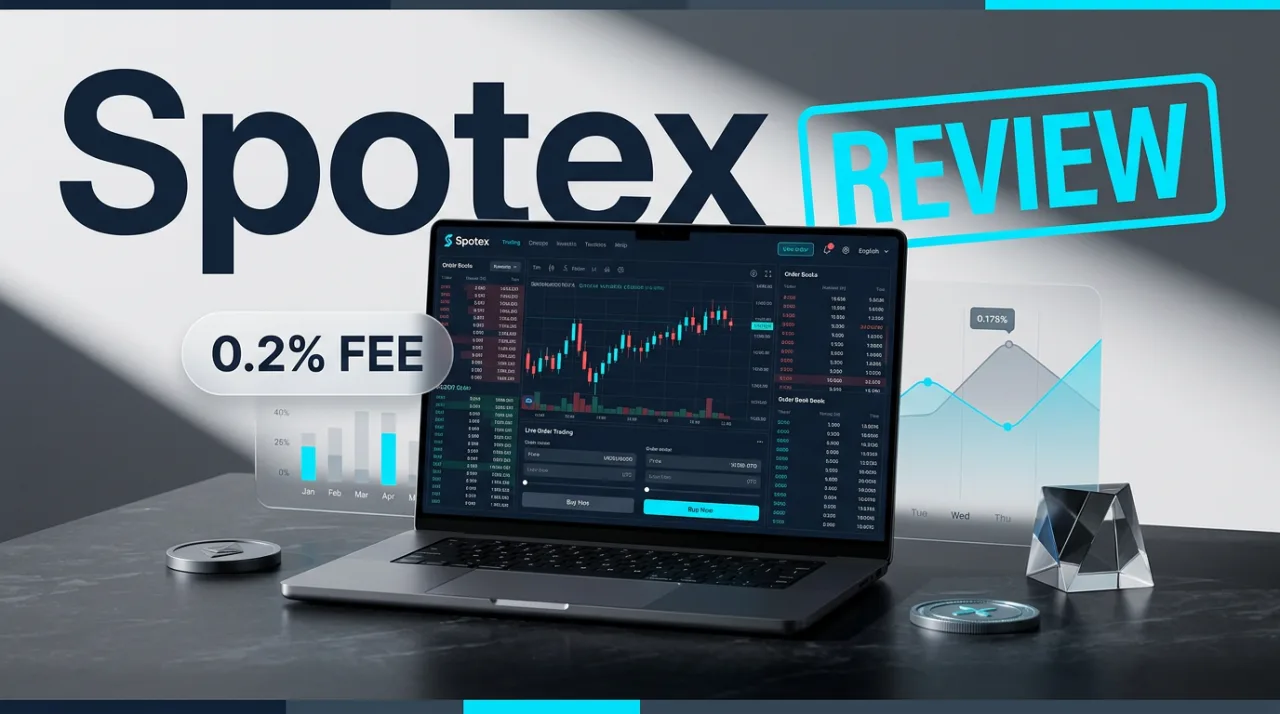
Spotex combines a retail cryptocurrency trading platform at SpotEx.trade with the institutional FX ECN at Spotex.com, which began operations in 2010. The exchange launched its crypto spot market between late 2024 and 2026 and now lists between 17 and 32 trading pairs while publishing daily Merkle-tree snapshots of reserves. Recent integration with Singapore-based liquidity provider Caladan targets banks and hedge funds that already use FX-style workflows.
Spotex Overview, Features, and Caladan Partnership
SpotEx.trade supports limit and market orders across major pairs such as BTC/USDT and ETH/USDT plus smaller tokens including RVN and niche assets. Users can access API endpoints, participate in community coin voting for new listings, and trade custom asset baskets against USDT or USDC with optional dollar-cost averaging schedules. The platform also issues a native SPOT token that claims revenue-sharing rights, though distribution mechanics remain undetailed in public materials.
Spotex.com continues to serve institutional clients with ECN technology, liquidity aggregation, and custody-agnostic execution for foreign exchange, precious metals, and digital assets. The October 27, 2026 announcement of the Caladan partnership adds a Singapore liquidity provider founded in 2017 that handles more than 170 billion dollars in annual volume across 65 venues. Caladan supplies spot, swap, and CFD markets and supports automated settlement for large orders, complementing earlier integrations with BitGo for off-exchange settlement.
The retail and institutional sides share branding yet operate on separate domains. Retail traders see standard order types and faucet rewards, while institutions receive low-latency aggregation tools and back-office reporting. No public data indicates shared order books between the two platforms.
Spotex Fees, Proof of Reserves, and Security Details
Retail spot trading carries a flat 0.2 percent maker and taker fee on every market, deducted from the received asset. Deposits are free, and withdrawals incur only the blockchain network fee displayed before confirmation. Minimum order sizes range from 1 to 5 USDT or USDC equivalent. No volume-based tiers or VIP schedules appear in the published fee schedule.
Proof-of-reserves data consists of daily SHA-256 Merkle-tree snapshots covering all account balances, with the root hash anchored on the Peercoin blockchain from a fixed address. As of late October 2026, the snapshot referenced 337 accounts and reported overall coverage near 101 to 102 percent, though individual assets such as RVN showed minor shortfalls in some reports. An open-source verifier lets users confirm their own balances, but the process remains self-reported and carries no independent audit opinion or deposit insurance.
The exchange states it holds no regulatory licenses for the crypto venue and explicitly notes the absence of deposit guarantees. Cold and hot wallets plus a payment-partner account supply the on-chain balances displayed in the reserves page. No major security incidents or regulatory actions have surfaced in public searches to date.
Spotex Pros, Cons, Comparisons, and Limitations
Spotex provides verifiable daily reserves data and an institutional liquidity partnership that few new retail exchanges can match. The flat fee structure removes complexity for occasional traders, and the basket-trade feature offers a practical way to manage multiple assets in one order. Institutional clients gain access to established FX workflows and custody options such as BitGo.
Limitations include the small number of listed pairs, lack of volume-tier discounts, and absence of independent audits. The platform remains unregulated for cryptocurrency activities, and users must handle their own custody after withdrawal. Coverage ratios can dip below 100 percent on individual assets even when the aggregate figure exceeds 100 percent.
| Exchange | Spot Fee | Proof of Reserves | Institutional Focus |
|---|---|---|---|
| Spotex | 0.2% flat | Daily Merkle + on-chain anchor | Caladan + BitGo integration |
| WhiteBIT | 0.1% base, lower with volume | Periodic attestations | Limited ECN tools |
| Kraken | 0.16%–0.26% maker/taker | Monthly attestations | Established prime brokerage |
WhiteBIT and Kraken each publish reserve attestations but do not anchor roots on a public blockchain daily. Kraken offers deeper institutional services, while WhiteBIT lists more spot pairs. Spotex differentiates through its FX-ECN heritage and the Caladan liquidity link, yet trails in trading volume and regulatory clarity.
Public user feedback remains limited because the retail platform is relatively new. No widespread scam reports appear in search results, but the absence of third-party audits and deposit protection leaves standard cryptocurrency platform risks intact. Users should verify their own balances in each daily snapshot and monitor coverage ratios over time.
Frequently asked questions
Is Spotex legit?
Spotex operates without cryptocurrency-specific licenses and publishes daily self-reported reserves. The institutional FX side has operated since 2010 with no major regulatory actions found, yet retail users face standard platform risks.
What are Spotex trading fees?
Retail spot trades incur a flat 0.2 percent fee on both maker and taker sides, charged in the received asset. Deposits are free and withdrawals only incur the network fee shown before confirmation.
How does Spotex proof of reserves work?
Daily Merkle-tree snapshots cover all balances and the root hash is anchored on the Peercoin blockchain. Users can run an open-source verifier to check their individual balances against the published data.
Does Spotex offer institutional services?
Yes. The Caladan partnership announced in October 2026 supplies liquidity for banks, brokers, and hedge funds through FX-style execution and settlement. Earlier integrations include BitGo custody for off-exchange settlement.
Comments
No comments yet. Be the first!