VAST AI OS Review: Agent Data Services via DigitalOcean Partnership
Review summary
VAST AI OS on DigitalOcean delivers unified agent data services with reduced boot times and integrated storage, database, and vector capabilities.
VAST AI OS review begins with the October 12, 2026 announcement of an expanded partnership between VAST Data and DigitalOcean. The arrangement places the VAST AI Operating System inside DigitalOcean’s AI-Native Cloud to supply fully managed Agent Data Services. Developers and small teams gain a single data layer that supports real-time context for agents without separate vector databases or ETL steps.
The service unifies file, object, and block storage with an ACID-compliant database and hyperscale vector search. Data becomes queryable across logs, documents, video, and images as soon as it arrives. Tenant isolation and per-agent governance controls are built in from the start.
VAST AI OS Features and Deployment on DigitalOcean
Core components include the Disaggregated Shared-Everything architecture, DataStore for a unified namespace, DataBase for transactional and vector workloads, and DataEngine for serverless functions. AgentEngine supplies Kubernetes-based runtime with autoscaling, a tools registry, and multi-agent orchestration. InsightEngine handles embeddings and retrieval-augmented generation directly in the same platform.
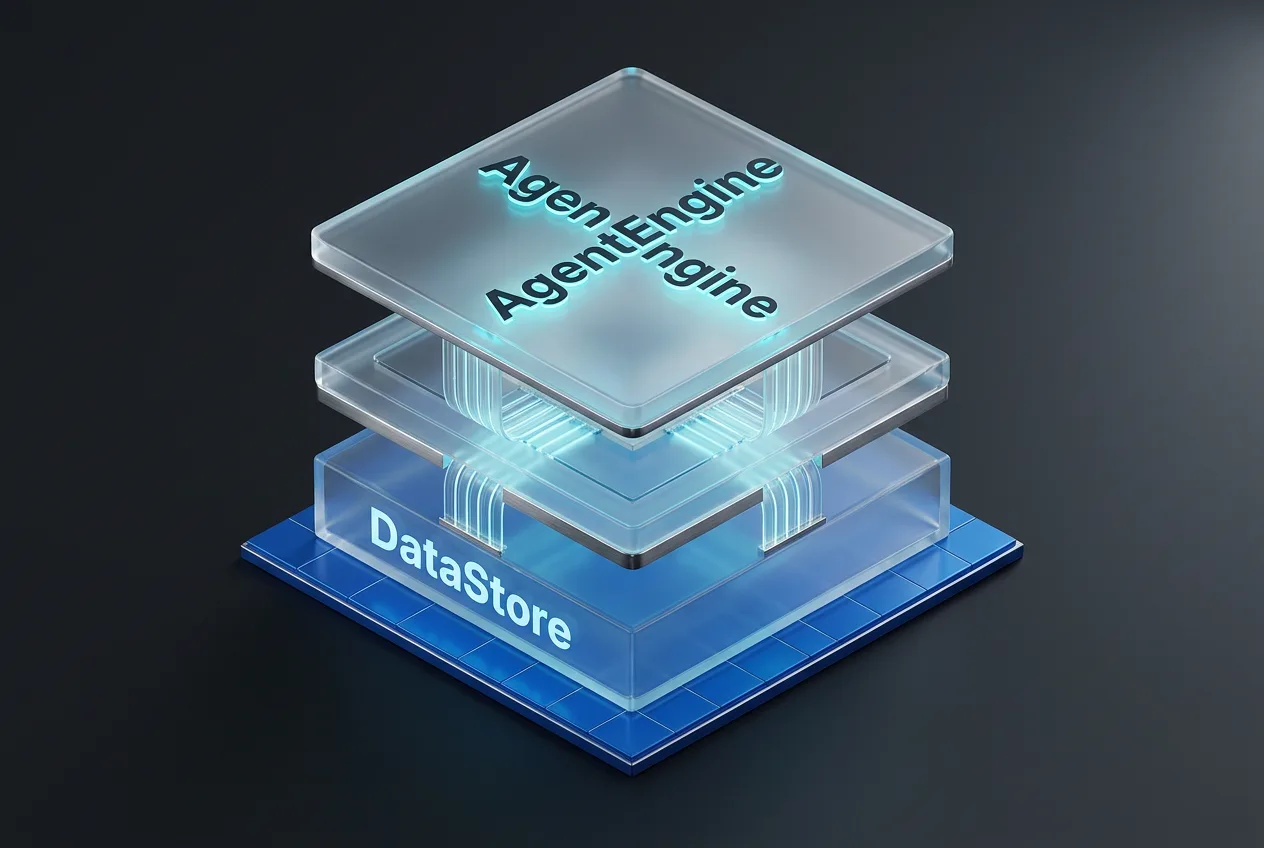
Deployment occurs through DigitalOcean GPU Droplets, bare metal servers, and managed Kubernetes. The global DataSpace namespace supports hybrid setups when needed. DigitalOcean reports droplet boot times falling from roughly 120 seconds to 15 seconds, with GPU idle time eliminated through tighter storage and compute integration.
Registration follows standard DigitalOcean account creation, after which users enable the managed Agent Data Services add-on. No separate licensing steps appear in the initial rollout. Interface access occurs via existing DigitalOcean consoles and APIs, with agent orchestration handled through the embedded Kubernetes layer.
Performance Gains, Limitations, and Market Position
Operational overhead drops because storage, database, and vector functions collapse into one governed catalog. The approach targets developers and mid-sized organizations that want production agentic workloads without the complexity of stitching multiple hyperscaler services. No public pricing details were released with the October announcement; users should check DigitalOcean’s current GPU Droplet and storage rates for cost estimates.
Security rests on tenant isolation and built-in access controls rather than add-on tools. No independent audits or incident reports specific to this deployment were available at the time of the partnership launch. Early positioning emphasizes simplified unit economics for LLM and agent workloads compared with larger cloud providers.
Public user reviews remain limited because the expanded service entered general availability only days before October 21, 2026. Common questions in developer forums focus on exact per-agent governance settings and long-term data egress costs. Competitor offerings such as AWS SageMaker with OpenSearch and Azure AI Search require separate configuration of storage, vector indexes, and orchestration layers, while the VAST-DigitalOcean stack keeps these functions inside a single catalog.
Limitations include the short public track record and lack of disclosed benchmarks beyond the stated boot-time reduction. Organizations with strict multi-cloud policies may need to evaluate DataSpace hybrid capabilities further. The partnership continues to roll out additional managed functions in the coming months.
Frequently asked questions
What is VAST AI OS on DigitalOcean?
It is a managed deployment of the VAST AI Operating System inside DigitalOcean’s cloud that supplies unified storage, database, and vector search for AI agents. The service removes the need for separate vector databases and ETL pipelines.
How does the partnership affect deployment speed?
DigitalOcean reports GPU Droplet boot times reduced from about 120 seconds to 15 seconds. The integrated stack also removes GPU idle time caused by separate storage and database layers.
Is pricing information available for VAST AI OS on DigitalOcean?
No specific pricing for the Agent Data Services layer was published with the October 2026 announcement. Costs currently follow standard DigitalOcean GPU Droplet and storage rates.
How does VAST AI OS compare with hyperscaler alternatives?
The platform keeps storage, vector search, and agent runtime in one governed catalog, whereas AWS and Azure solutions typically require separate configuration of multiple services for similar functionality.
Comments 2