Autheo Blockchain Review: Cosmos SDK L1 with EVM Compatibility and Post-Incident Recovery
Review summary
Autheo blockchain launched mainnet in May 2026 as an EVM-compatible Layer-1 using Cosmos SDK and CometBFT, with THEO token staking live before an IBC-related incident paused operations.
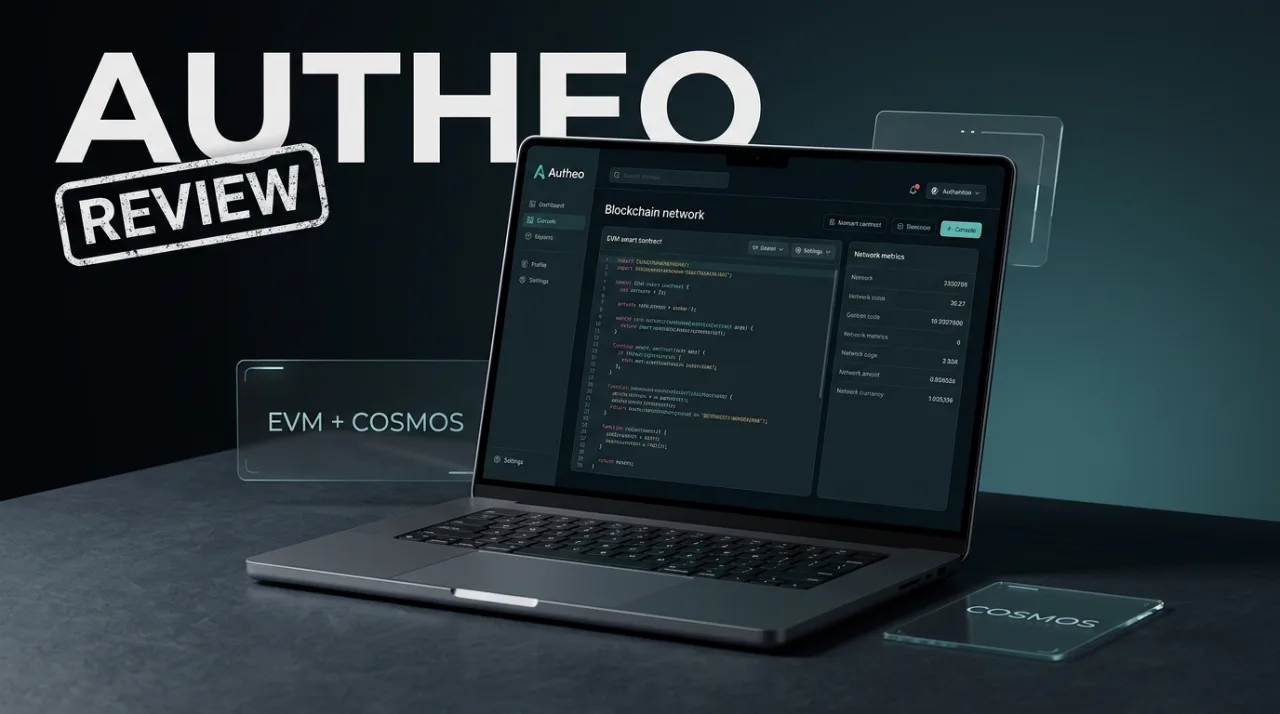
Autheo review examines a Layer-0 operating system that bundles an EVM-compatible Layer-1 chain built on the Cosmos SDK and CometBFT consensus. The project integrates identity services, planned decentralized compute, and AI orchestration under a single stack that supports native IBC interoperability. Mainnet went live on May 14, 2026, with staking and transaction fees active from day one.
Autheo Blockchain Mainnet and Core Architecture
The chain runs with Chain ID 2127 and accepts Solidity contracts through Hardhat, Foundry, and Remix. Developers access DevHub tooling immediately after launch, while multi-language runtimes for Move and Rust remain in development. Testnet recorded between 1.8 million and 2.2 million wallets, roughly one million smart contracts, and up to 10 million transactions before mainnet activation.
Validator seats are capped at 399 licensed positions gated by NFTs, split into Sovereign, Prime, and Core tiers that determine emission rights. Roughly 7.5 percent of the token supply, or 525 million THEO, is allocated to validators across seven years. Pre-mainnet audits covered testnet code by Halborn and mainnet code by CertiK.
Planned additions include TheoID for identity, a Marketplace for decentralized compute and storage, and THEO AI for orchestration. Post-quantum cryptography modules based on NIST standards ML-KEM, ML-DSA, and SLH-DSA are scheduled for later phases. The network positions itself for agentic applications that bridge conventional web services with blockchain execution.
Autheo Token Economics, Security Incident and Limitations
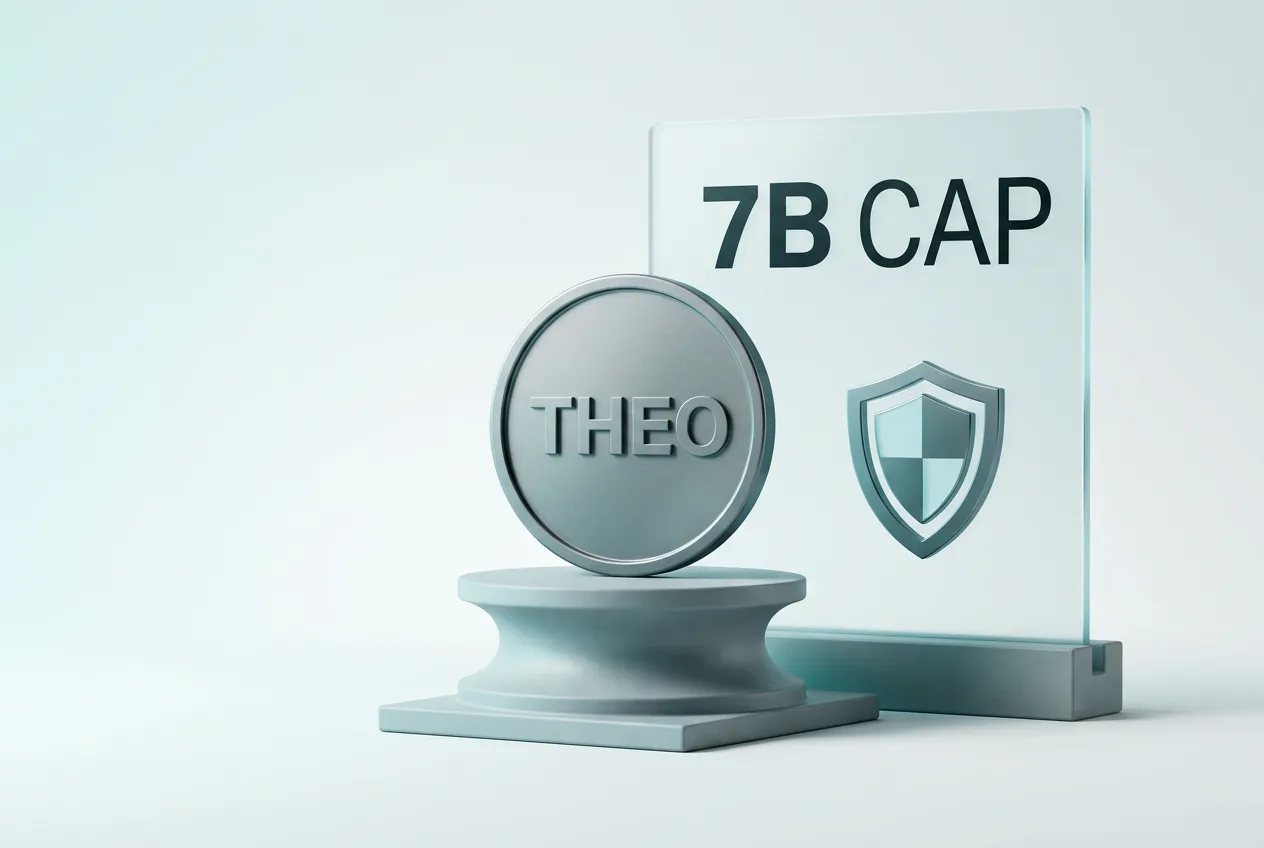
THEO carries a 7 billion hard cap, with 371 million tokens, or 5.3 percent, released at TGE on August 20, 2026. Initial trading on Hydrex produced an approximate price of $0.05, implying an $18.66 million market cap and $350 million fully diluted valuation. Token utility currently covers staking and fees, with future use cases listed for compute, storage, AI inference, and identity verification. Emissions follow vesting schedules with activity-based demand mechanics.
On October 12, 2026, an IBC asset-validation flaw permitted unauthorized conversion of external assets into approximately 219 million native THEO. On-chain data indicated roughly 119 million tokens minted across two events, with portions moved and exchanged for about 292 ETH. Mainnet halted, cross-chain bridges suspended, and trading paused while supply reconciliation began. Internal fixes and a planned third-party audit were reported by October 30, though no restart date had been confirmed.
Table comparing key parameters with two established Cosmos-based chains:
| Metric | Autheo | Cosmos Hub | Osmosis |
|---|---|---|---|
| Consensus | Hybrid PoA/PoS (CometBFT) | Tendermint PoS | Tendermint PoS |
| Validator cap | 399 NFT-gated | 175 active | 100 active |
| Token max supply | 7 billion | ~390 million ATOM | 1 billion OSMO |
| IBC support | Native at launch | Native | Native |
| EVM layer | Native EVM L1 | Via Evmos | Via EVM zones |
Public user feedback remains sparse after the October halt. Earlier testnet participants noted stable transaction throughput, while post-incident commentary on social channels focused on delayed remediation timelines and supply uncertainty. No aggregated complaint volume from independent forums is available at this stage.
Autheo Blockchain Compared with Alternatives and Outstanding Issues
Autheo differs from standard Cosmos chains through its integrated EVM execution environment and stated AI orchestration layer. Unlike pure EVM L1s, it bundles identity and planned decentralized marketplace components from the outset. Token allocation to validators exceeds typical Cosmos percentages, and the fixed 7 billion cap contrasts with inflationary models used by several peers.
Remaining limitations include the absence of a confirmed mainnet restart date, paused bridging, and incomplete rollout of TheoID and Marketplace features. Emissions schedules and exact circulating supply after the incident require updated on-chain verification. Pre-incident audits do not cover the post-fix code, and third-party review status is listed as pending.
Frequently asked questions
What caused the Autheo mainnet halt?
An IBC asset-validation flaw allowed unauthorized minting of native THEO tokens on October 12, 2026. The network was paused while fixes were developed and supply reconciliation started.
When did Autheo mainnet launch?
Mainnet activated on May 14, 2026, with staking and transaction fees enabled immediately. DevHub tooling was available to developers from that date.
What is the THEO token max supply?
THEO has a fixed maximum supply of 7 billion tokens. Approximately 5.3 percent entered circulation at the August 2026 TGE.
Is Autheo EVM compatible?
Yes. The chain supports Solidity contracts through standard tools such as Hardhat, Foundry, and Remix under Chain ID 2127.
What is the current status of Autheo after the incident?
As of late October 2026, mainnet remains halted, cross-chain services suspended, and trading paused. Internal testing of fixes continues with a third-party audit planned.
Comments
No comments yet. Be the first!