TabaPay Review: Payment Infrastructure, Authorization Rates and Enterprise Integrations
Review summary
TabaPay operates a Palo Alto-based money movement platform with a unified API for cards and bank rails, serving clients like Klarna and SoFi.
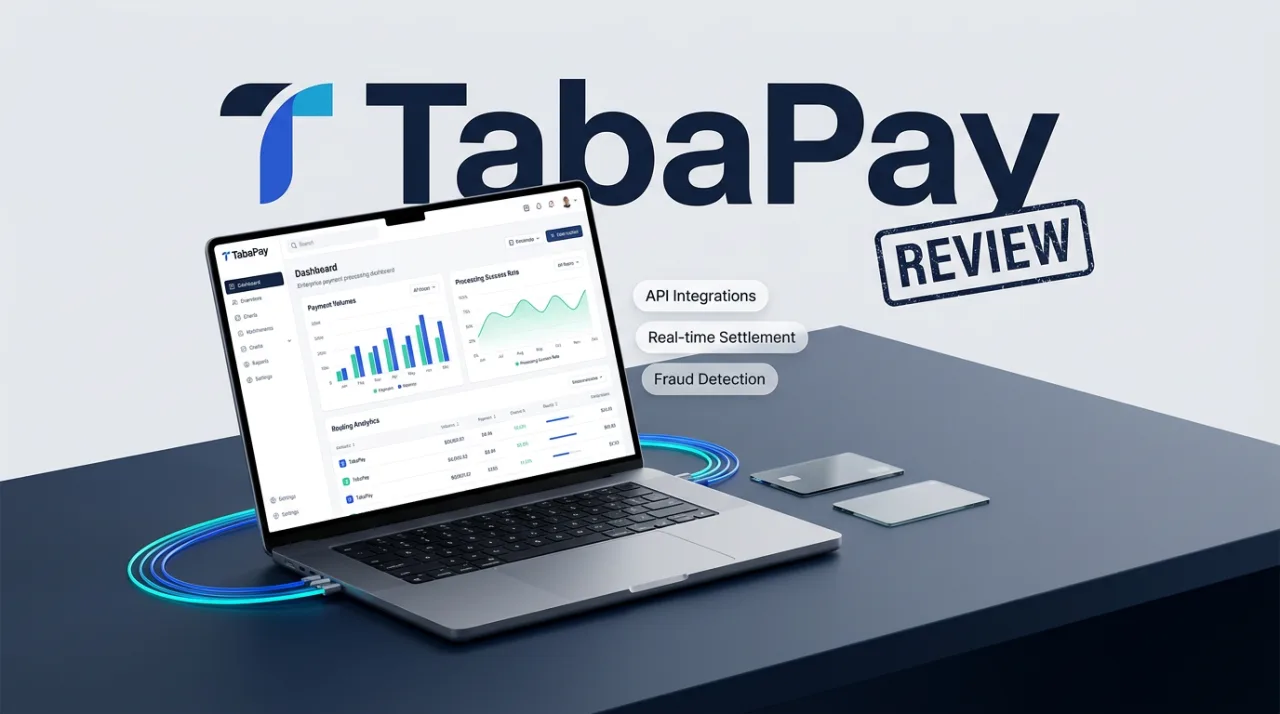
TabaPay review examines a payment platform founded in 2017 that provides a single REST API for moving funds across card networks and bank rails. The company, based in Palo Alto, targets fintechs, lenders, payroll providers, and other regulated entities that need high-volume processing with direct network access. It currently handles millions of transactions daily and is on track to exceed $100 billion in annualized volume during 2026.
TabaPay Infrastructure, Features, and Performance
The platform connects directly to Visa, Mastercard, Discover, Amex, and regional debit networks, plus RTP, FedNow, and ACH rails through more than 20 partner banks. A single API endpoint manages acceptance, payouts such as push-to-card, and risk controls including KYC/KYB checks, AVS, 3DS, and real-time monitoring against a database of over 100 million cards and accounts. Reported authorization rates reach 98 percent on certain account-funding flows, while fraud rates sit at roughly half typical industry levels. One client pilot showed card attachment rates increase 153 percent and chargebacks drop 57 percent.

PCI Level 1 and SOC 1/2 Type II certifications apply, along with money transmitter licenses across most U.S. states. The system supports sub-merchant boarding and complex compliance workflows common among ISOs and PayFacs. Eight consecutive years of profitability are cited in company materials, and uptime exceeds 99.99 percent.
TabaPay Pricing, Comparisons, and Limitations
Pricing follows an Interchange++ model with network fees and interchange passed through at cost plus a negotiated processing fee. No public rate schedule exists; all terms require direct sales engagement. Reported examples indicate blended savings of 63 percent on qualified account funding, 39 percent on debt repayment, and 12 percent on push-to-card transactions compared with typical PSPs, though results vary by volume and qualification.
Common alternatives include Stripe Connect, Moov, and Checkout.com. The following table summarizes key differences based on published capabilities:
| Provider | Published Pricing | Direct Bank Rails | Sub-Merchant Support |
|---|---|---|---|
| TabaPay | Interchange++ (custom) | Yes (RTP, FedNow, ACH) | Yes |
| Stripe Connect | Flat + percentage tiers | Limited | Yes |
| Moov | Usage-based API fees | Yes | Limited |
| Checkout.com | Custom Interchange++ | Partial | Yes |
Independent user reviews remain limited in public sources. No widespread complaint patterns appear in regulatory filings or review aggregators beyond general payment industry noise. Limitations include the absence of self-serve onboarding, reliance on custom contracts for all clients, and the pending acquisition of Transact Bank, which remains subject to regulatory approvals expected in late 2026. Performance metrics and exact fees are program-specific and require verification through direct contact.
Overall, TabaPay supplies enterprise-grade payment infrastructure with strong reported authorization and cost metrics for high-volume, regulated use cases, yet its custom model and limited public feedback distinguish it from platforms offering published tiers or broader self-service options.
Frequently asked questions
What payment rails does TabaPay support?
TabaPay supports Visa, Mastercard, Discover, Amex, regional debit cards, RTP, FedNow, and ACH through direct connections and partner banks.
Is TabaPay pricing publicly available?
No public rate card exists. Pricing uses an Interchange++ structure and requires negotiation with sales for each client program.
How does TabaPay compare to Stripe Connect?
TabaPay emphasizes direct network connections and bank rails for regulated industries, while Stripe Connect offers published tiers and broader self-serve tools with fewer direct bank integrations.
What compliance certifications does TabaPay hold?
TabaPay maintains PCI Level 1, SOC 1/2 Type II, and money transmitter licenses in most U.S. states, plus support for complex KYC and sub-merchant workflows.
Comments
No comments yet. Be the first!