Mistral Large 4 Review: Open Weights Release, API Pricing, and Coding Performance Benchmarks
Review summary
Mistral Large 4 offers a 1M-token context window and open weights under a modified MIT license. This review examines its API costs, coding benchmarks, and self-hosting requirements.
Mistral Large 4 delivers a 1.05-trillion-parameter multimodal mixture-of-experts model with 49–52 billion active parameters and a 1-million-token context window. The model accepts native text and image inputs and outputs text across 160 languages. Mistral AI released the public preview API on October 6, 2026, followed by open weights on October 29, 2026.
Trained on 3,800 NVIDIA Grace Blackwell GPUs in European data centers, the model includes a 1.6-billion-parameter Pixtral-based vision encoder. It supports low, medium, and high reasoning modes with high as the default. The open weights appear on Hugging Face under the Mistral Ecosystem Open-Weight License, which permits research and non-commercial use while requiring a separate license for model-as-a-service offerings.
Mistral Large 4 Specifications and Release Details
The model ships in FP8 and NVFP4 checkpoints. Self-hosting works immediately through vLLM, SGLang, transformers, and llama.cpp, with GGUF quantized versions available. A quantized build runs on approximately four NVIDIA B200 or B300 GPUs. The release positions the model for defensive cybersecurity tasks such as malware analysis, vulnerability prioritization, and rule generation.
Benchmarks reported by Mistral show 61.7 percent on DeepSWE v1.1, 59.4 percent on SWE-Atlas-QnA, and 41 percent on Terminal-Bench 4.0, an improvement from 28 percent in the preview version. On the Coding Agent Index the model scores between 48 and 49.8 percent while consuming roughly 47 percent fewer tokens per task than earlier iterations. Independent testing by Artificial Analysis places the Coding Agent Index at 48, second among open-weight models behind GLM-5.3.
Cybersecurity evaluations include 79–82 percent on CyberGym-E2E for reproducing and patching memory-safety bugs and 93 percent on Cybench across 40 CTF challenges. The model also records top-five placement on some AA Cyber Index reports and maintains strong refusal rates on malicious prompts.
API Pricing, Deployment, and Performance Comparison
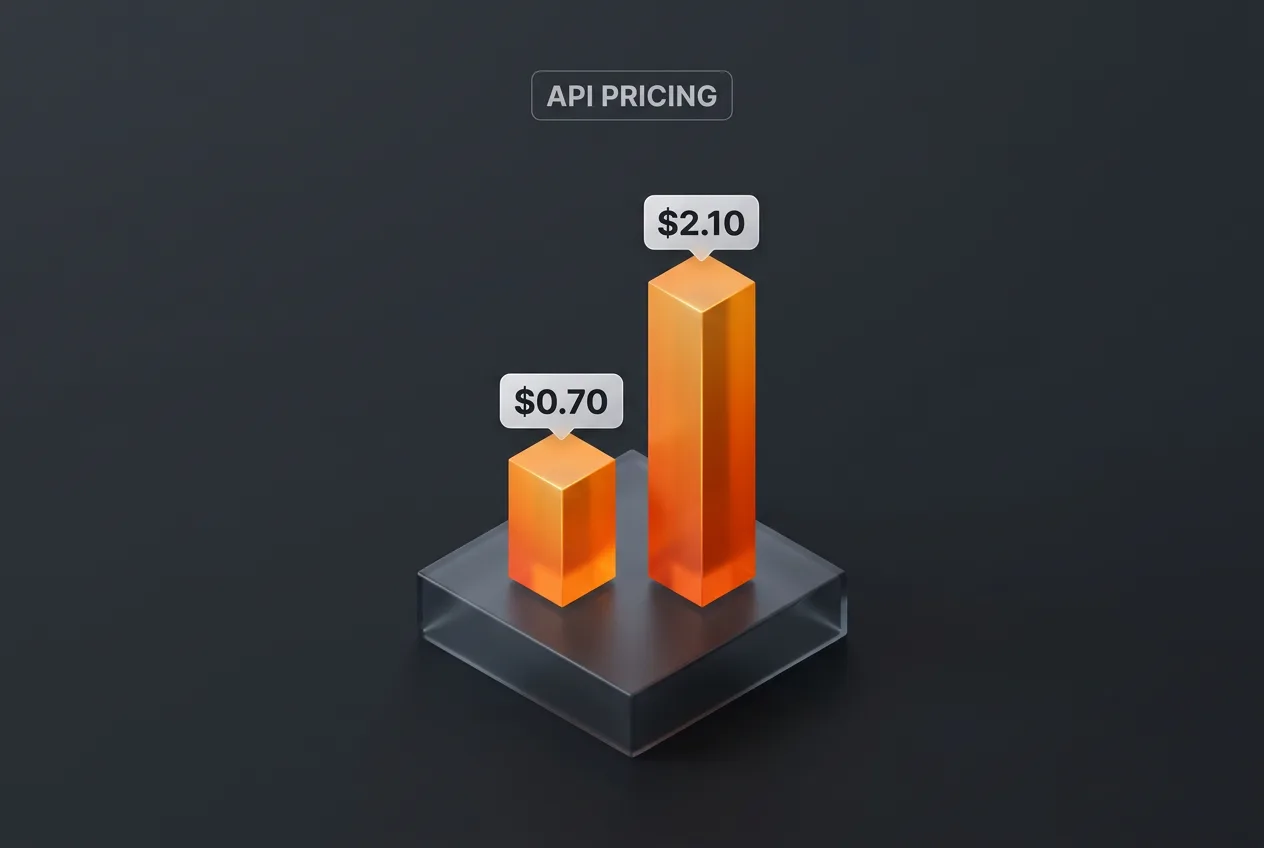
Mistral’s API lists input tokens at $0.70 per million, cached input at $0.07 per million, and output at $2.10 per million as of late October 2026. These rates represent roughly half the preview pricing of $1.36 input and $4.18 output. Batch discounts apply, and the model is also available through OpenRouter and Microsoft Foundry. Self-hosting eliminates per-token fees but requires the GPU resources noted above.
Compared with GLM-5.3 and DeepSeek V4.1 Flash, Mistral Large 4 trails slightly on the overall Intelligence Index v5.0 (26 versus 32) yet matches or exceeds both on certain coding and cybersecurity tasks while using fewer tokens. Terminal-Bench 4.0 independent scores sit near 25 percent and FrontierCode 2.0 near 15 percent, still competitive for an open-weight model outside China.
| Model | Coding Agent Index | Terminal-Bench 4.0 | API Input per 1M |
|---|---|---|---|
| Mistral Large 4 | 48 | 25% | $0.70 |
| GLM-5.3 | 49 | Not reported | Not reported |
| DeepSeek V4.1 Flash | Not reported | Not reported | Not reported |
Pros include the 1-million-token context, day-zero inference support, 63 percent lower cost per task versus the preview, and competitive coding results with reduced token usage. Cons center on the need for a commercial license for hosted services, limited independent user feedback at launch, and an overall Intelligence Index below leading Chinese open models.
Public user reviews remain sparse because the weights released only days before November 1, 2026. Early developer reports on Hugging Face and technical forums note strong document reasoning and efficiency gains after reinforcement learning, alongside occasional complaints about setup complexity for the largest checkpoints. No widespread complaints about safety or refusals appear in available sources.
Limitations and Current Standing
Independent evaluations cover only a subset of benchmarks, and further fine-tunes or specialized variants have not yet appeared. Quantized performance on consumer-grade hardware remains untested at scale. The model targets defensive cybersecurity and coding workloads rather than general consumer chat use.
Mistral Large 4 provides verifiable open weights, transparent API pricing, and documented coding gains at lower token counts. Organizations evaluating open-weight multimodal models with long context should compare its specific benchmark numbers against GLM-5.3 and DeepSeek alternatives before deployment.
Frequently asked questions
When were Mistral Large 4 open weights released?
Mistral released the open weights on October 29, 2026, under the Mistral Ecosystem Open-Weight License on Hugging Face.
What is the current API price for Mistral Large 4?
The API charges $0.70 per million input tokens, $0.07 for cached input, and $2.10 per million output tokens.
How does Mistral Large 4 perform on coding benchmarks?
Vendor results show 61.7 percent on DeepSWE v1.1 and 41 percent on Terminal-Bench 4.0. Independent tests place the Coding Agent Index at 48.
Can Mistral Large 4 run on consumer hardware?
Quantized versions require approximately four NVIDIA B200 or B300 GPUs for inference; smaller quants may fit on fewer cards but lack published benchmarks.
Comments
No comments yet. Be the first!