OKX Review: Proof of Reserves Methodology, $36B On-Chain Assets, and Withdrawal Policies
Review summary
OKX maintains monthly proof of reserves reports using zk-STARK proofs that cover $36 billion in on-chain assets across 22 cryptocurrencies.
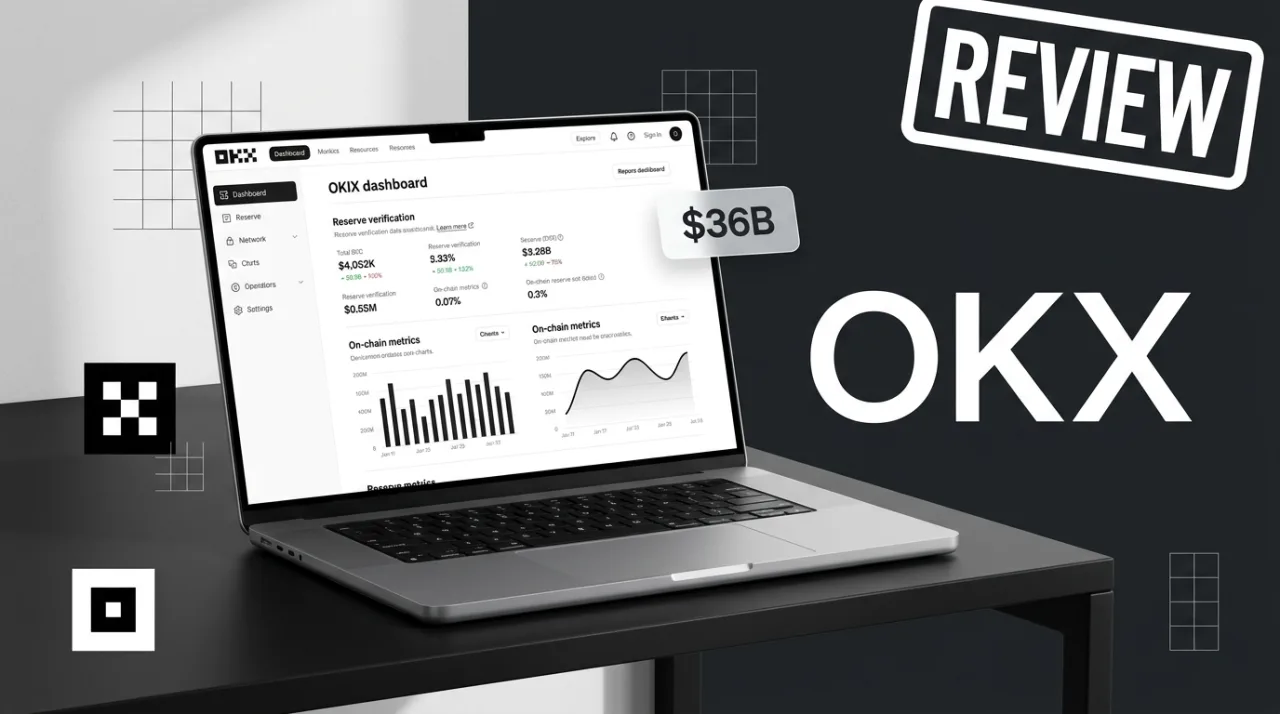
OKX review readers often focus first on asset transparency and withdrawal mechanics. The exchange publishes monthly proof of reserves reports that verify customer balances through cryptographic methods and show reserve ratios above 100 percent for major assets.
OKX launched its proof of reserves program in November 2022. By late October 2026 the platform had released 48 consecutive monthly reports. The most recent snapshot, taken around October 3, listed roughly $36.36 billion in on-chain assets for 22 cryptocurrencies, with primary assets valued at $29.4 billion.
OKX Proof of Reserves Methodology and Key Figures
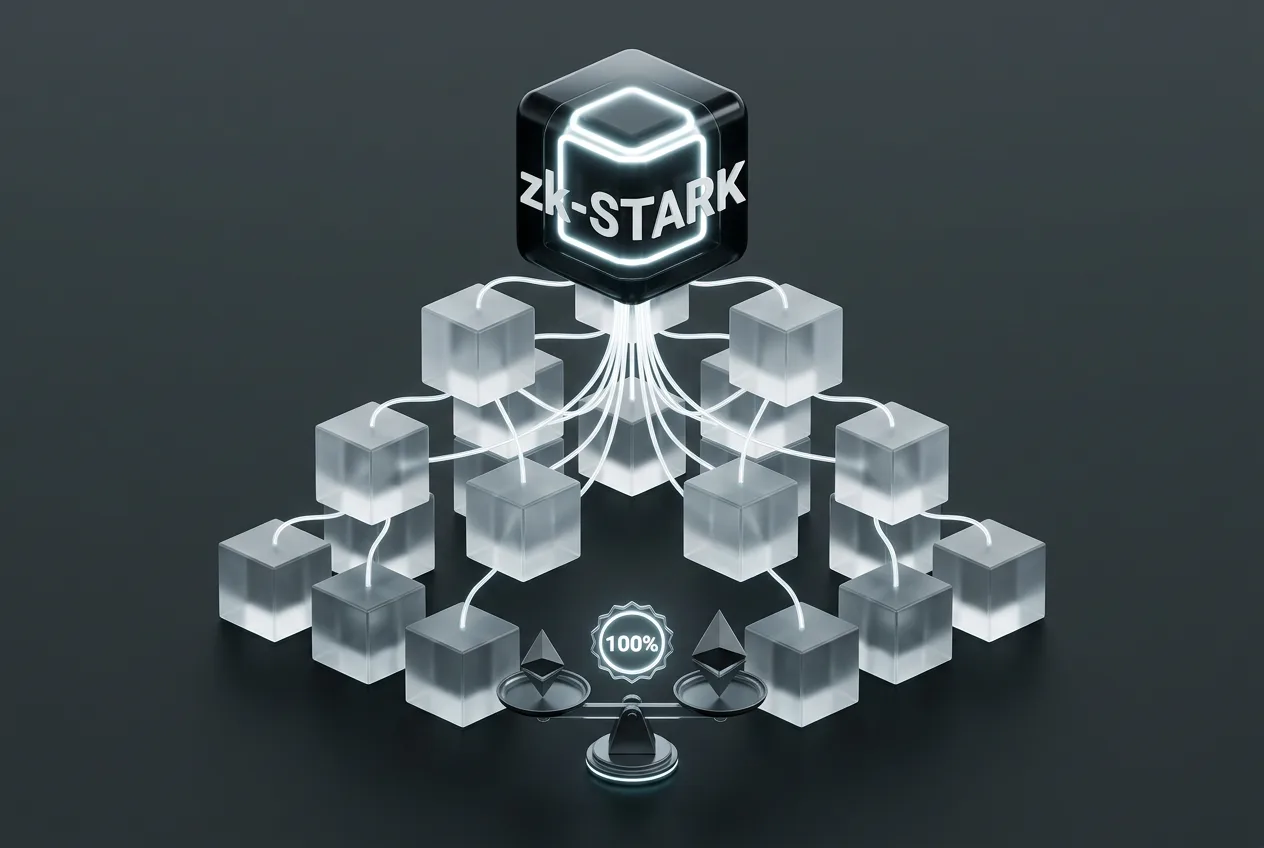
OKX generates each report from a snapshot of user balances stored in an encrypted Merkle sum tree. The system applies zk-STARK zero-knowledge proofs to confirm three conditions: the sum of all balances matches the declared total, no account shows a negative balance, and every account appears in the tree. Users can download an open-source validator from GitHub to check their own inclusion, confirm non-negativity, and verify wallet ownership through signed messages.
The October 2026 report showed the following reserve ratios: Bitcoin at 110 percent with 142,809 BTC in customer accounts against 156,475 BTC held in wallets, Ethereum at 100 percent, USDT at 105 percent, and USDC at 101 percent. Additional assets such as XRP, SOL, and DOGE also exceeded 100 percent coverage. The reports remain snapshots, so transactions completed after the cutoff date or assets held outside the covered set do not appear in the published figures.
Third-party references, including audits cited in public coverage, support the published data. On-chain wallet addresses remain publicly available for independent verification.
OKX Withdrawals, Fees, and Security Tools
OKX charges no fees for deposits. Withdrawal fees equal the network cost at the time of the transaction and appear before confirmation. Recent examples include approximately 0.000015 BTC on the Bitcoin network and 1.5 USDT for TRC20 transfers, with lower costs available on Arbitrum, Solana, or Polygon. Minimum withdrawal amounts vary by asset and network.
Daily crypto withdrawal limits start at roughly $10 million for regular users and rise to $80 million for higher VIP tiers, recalculated daily at 16:00 UTC. Internal transfers between verified OKX accounts incur no fees and settle instantly. Fiat withdrawals through SEPA carry separate limits and charges.
In October 2026 OKX introduced the Shield program in the United States and Europe. The discretionary reimbursement service covers up to $100,000 for regular users and up to $500,000 for top VIP tiers in cases of qualifying account takeovers. Users must enable passkeys, large-withdrawal protections, and multi-factor authentication to qualify. Early adoption reached 45 percent among European VIP accounts and more than 37 percent of regional assets under management.
OKX Limitations, Competitor Context, and Current Status
Proof of reserves reports exclude assets held after the snapshot moment and do not cover every token listed on the platform. Withdrawal fees fluctuate with network conditions and cannot be predicted exactly in advance. Limits and Shield eligibility require users to maintain specific security settings.
Compared with Binance and Coinbase, OKX provides a higher number of consecutive monthly reports and uses zk-STARK proofs without a trusted setup. Binance publishes periodic attestations with different verification tools, while Coinbase relies on traditional attestations and regulatory licenses. OKX withdrawal limits sit between those of Binance and Coinbase for mid-tier users but require explicit VIP progression for the highest caps.
Common user complaints center on occasional delays during high network congestion and the need to enable multiple security features before accessing full withdrawal limits. Positive comments frequently mention the transparency of on-chain wallet data and the absence of deposit fees.
Frequently asked questions
How often does OKX publish proof of reserves reports?
OKX releases monthly reports and had published 48 consecutive reports by late October 2026. Each report uses a snapshot date and zk-STARK proofs for verification.
What reserve ratio does OKX show for Bitcoin?
The October 2026 report listed Bitcoin at 110 percent, with customer balances of roughly 142,809 BTC against 156,475 BTC in platform wallets.
Are OKX withdrawal fees fixed?
No. Fees match current network costs and appear before users confirm a transaction. They vary by asset, network, and congestion levels.
What is the OKX Shield program?
OKX Shield offers discretionary reimbursement for qualifying account takeovers in the US and Europe. Coverage reaches $100,000 for regular users and up to $500,000 for higher VIP tiers when security settings are enabled.
Comments
No comments yet. Be the first!