Stoa Cloud Review: Deposit-Based Storage Instead of Subscriptions
Review summary
Stoa Cloud replaces recurring fees with fixed-term cash deposits at partner banks in exchange for 1- to 3-year cloud storage access.
Stoa Cloud provides access periods of one, two, or three years to personal cloud storage by requiring users to place cash deposits with regulated UK partner banks rather than paying monthly subscriptions. The service launched in announcements in mid-October 2026 from UK fintech Stoa, which already operates Stoa Pots that convert idle cash into upfront perks such as streaming credits. Deposits remain with banks such as Griffin Bank and stay protected by the FSCS up to £120,000 per depositor per institution, while Stoa itself holds no banking licence.
Core Mechanics and Infrastructure
The platform runs on white-label technology from Synchronoss Technologies, the same system used by major carriers including AT&T and Verizon. This backend supplies standard functions such as file backup, sync across devices, and secure personal storage. Users receive storage capacity calibrated to match common subscription tiers, for example the equivalent of 50 GB or 2 TB plans from services like Apple iCloud+.
Instead of earning interest on sight deposits, participants lock funds for the chosen term and receive storage access in return. The model targets the gap between low interest rates on everyday deposits, around 1.65 percent effective in Bank of England data from July 2026, and the cost of ongoing cloud fees. Stoa plans both direct consumer sign-up and distribution through partner banks, supermarkets, and insurers.
Pricing Approach, Security, and Current Limitations
Deposit sizes are set to offset the value of avoided subscription payments over the fixed term, though exact pound amounts per gigabyte tier remain unpublished at announcement. Existing Stoa Pots already offer 12-month deposit options for other benefits, suggesting similar term lengths will apply to storage. No recurring charges occur once the deposit is placed, and funds return at term end provided no early withdrawal penalties apply.
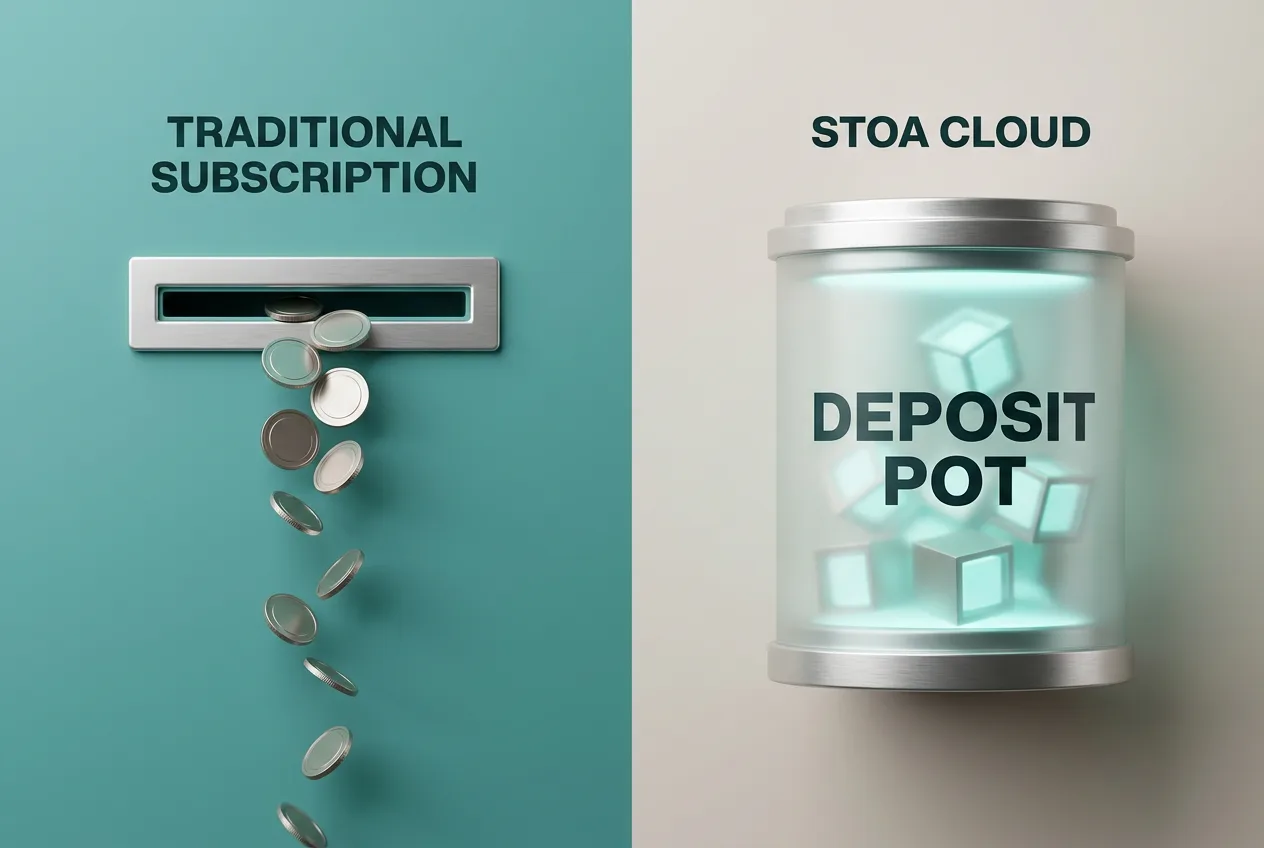
Data security inherits the protections of the Synchronoss platform, which supports encryption and standard compliance for personal cloud services. FSCS coverage applies only to the cash deposit itself. Because the service is still in phased rollout, independent user reviews and complaint records do not yet exist in public sources. Comparisons with traditional providers such as iCloud or Google One currently rest on the absence of monthly billing versus the requirement to tie up capital for the full term.
Confirmed capacity allocations, exact deposit tables, and long-term partnership agreements remain unavailable. Early users will need to monitor Stoa’s site for updated tier details once wider availability begins.
Frequently asked questions
How does Stoa Cloud differ from standard cloud subscriptions?
Users place a cash deposit with a partner bank for a fixed term instead of paying monthly. Storage access replaces interest earnings for that period.
Is the deposited money protected?
Deposits sit with authorised UK banks and fall under FSCS protection up to £120,000 per depositor per institution.
When will Stoa Cloud become available?
Announcements in October 2026 indicated imminent or phased launch, with plans for direct and B2B distribution channels.
What storage capacities does Stoa Cloud offer?
Specific gigabyte or terabyte allocations tied to deposit amounts have not been published in initial announcements.
Comments 1